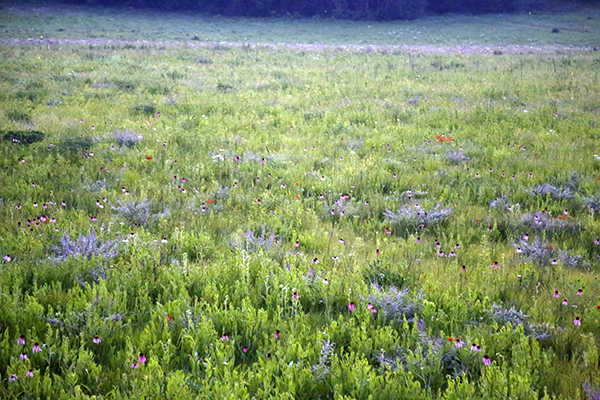
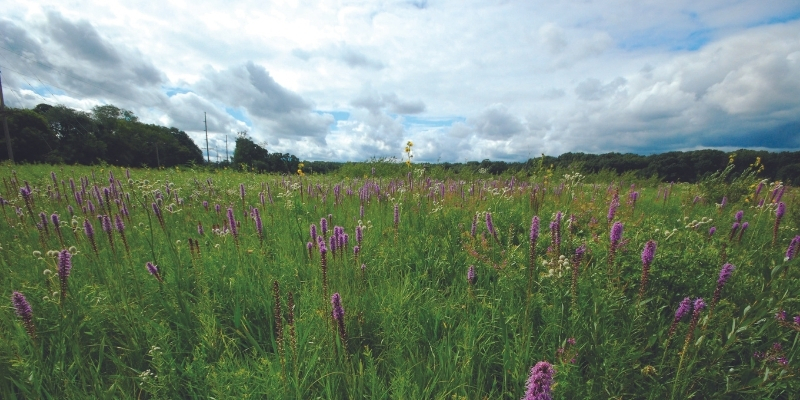
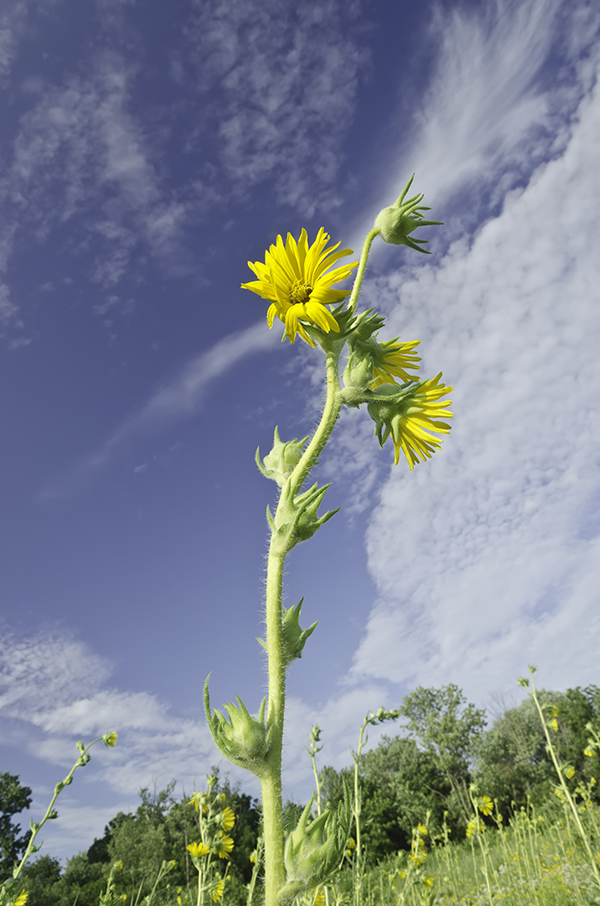
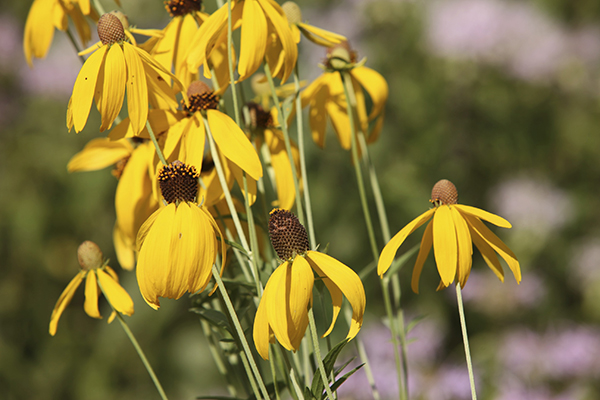
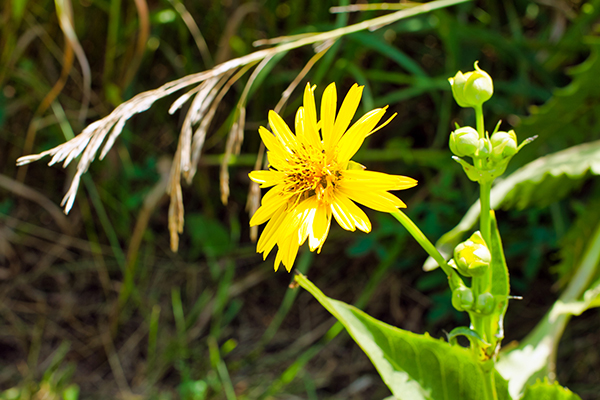
Prairies are made up of mostly grasses, sedges (grasslike plants), and other flowering plants called forbs (e.g. coneflowers, milkweed).
Historically, wildfires played a very important role in shaping prairies. Fire keeps forest plants from taking over and allows the soil to warm up quickly, making the prairie plants grow back faster. Prairies once covered two million acres of Wisconsin As Europeans settled in Wisconsin, they converted the treeless, fertile prairies into crop fields and controlled the sweep of wildfires. Today, less than 12,000 scattered acres exist. As grasslands are lost, so are the animals that live there. In order to protect and maintain the biodiversity of prairie ecosystems, special restoration techniques, such as prescribed or controlled burning (burning on purpose for specific reasons), can give grasslands a chance for rebirth.
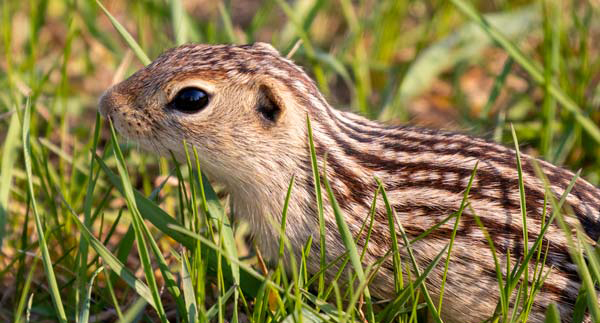
Sometimes called "Federation Squirrels" because the pattern on their back looks like stars and stripes.
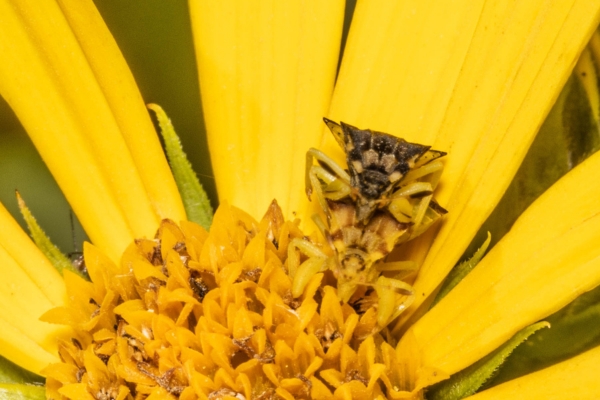
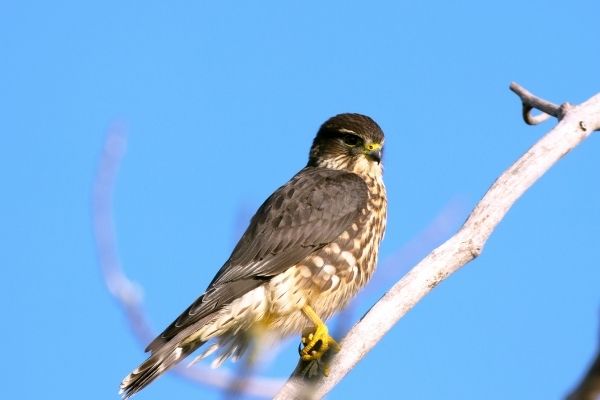
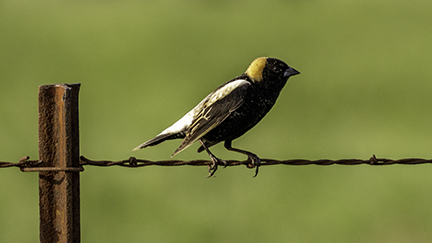
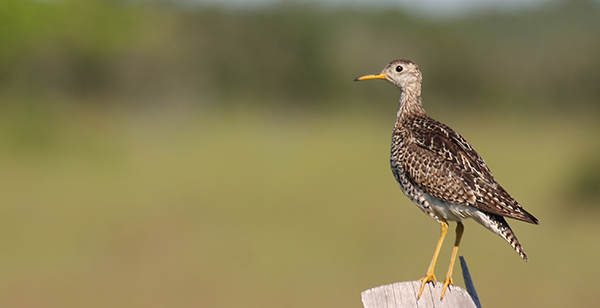
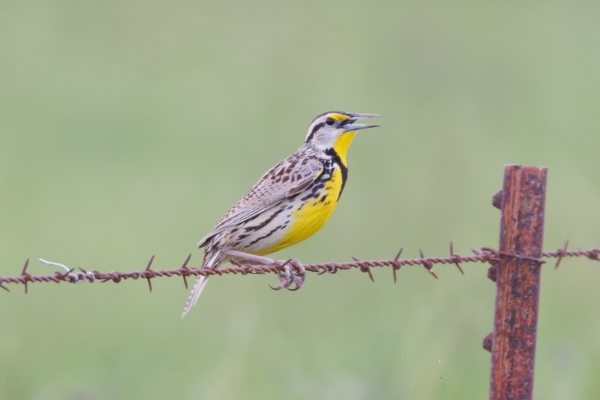
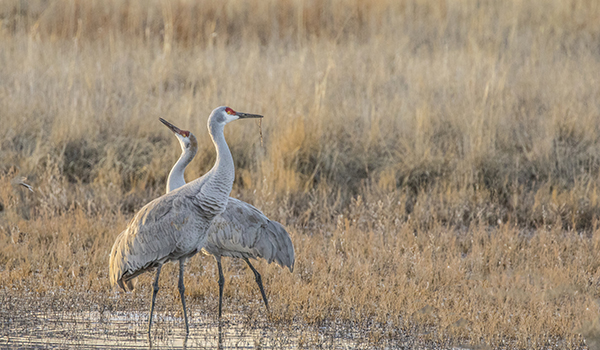
This colorful bird is well suited to life in the prairie. Its tan, black and white markings hide it well in the yellow-tan grasses.
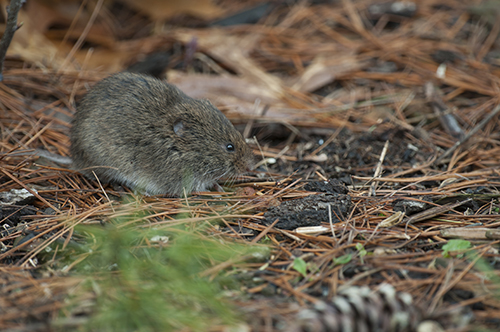
Voles leave behind clues. Look for "runways" lined with grass, rice-shaped scat, tiny footprints in the snow, and grassy nests.
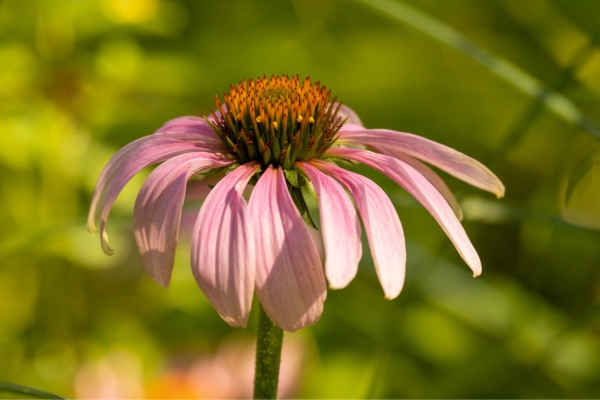
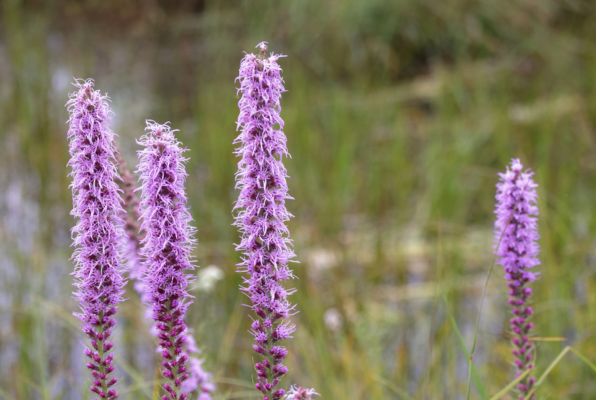
Look for purple coneflowers in prairies and backyards. The purple flowers bloom from summer to early fall.
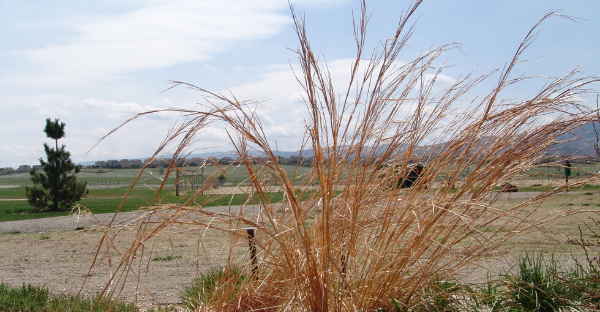
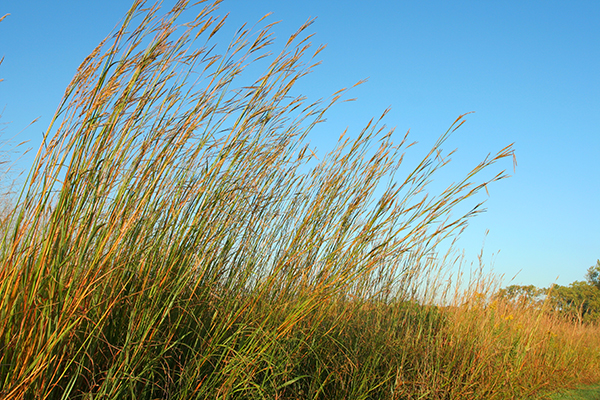
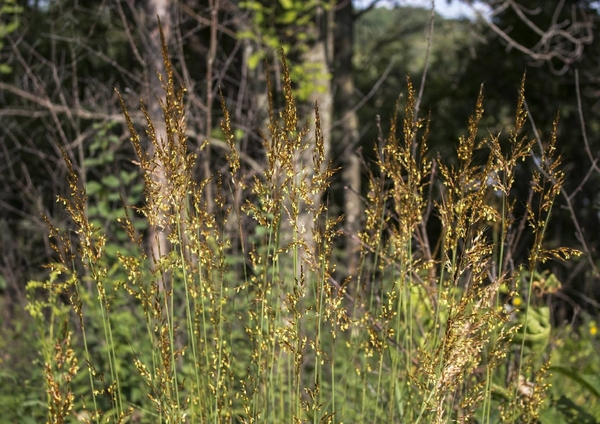
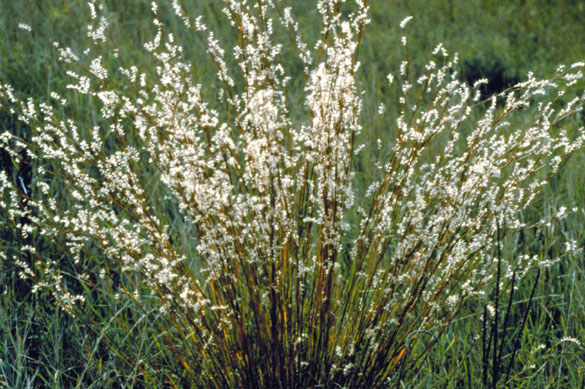
This Wisconsin prairie grass can be found in high prairies in southern Wisconsin to the north.