
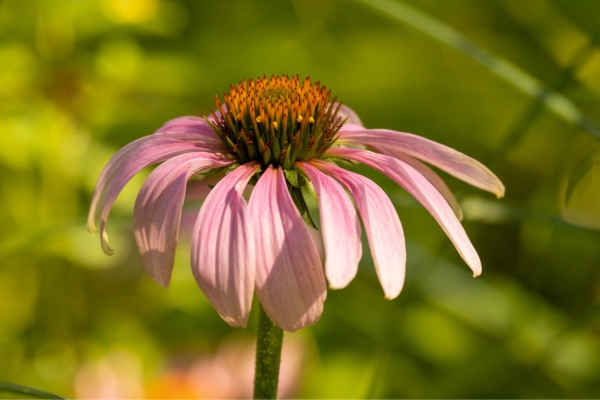
Common name: purple coneflower
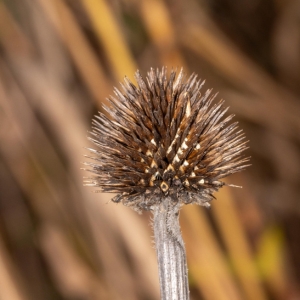
Scientific name: Echinacea purpurea - The first part of the scientific name, Echinacea, is Greek and means "sea urchin" or "hedgehog." What part of the plant reminds you of a hedgehog?
What do purple coneflowers look like?
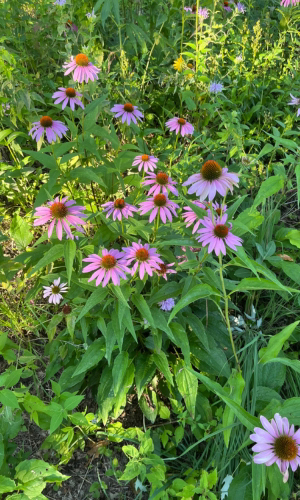
Purple coneflower are tall plants with large, showy flowers. Look for a bristly cone in the center of the flower with narrow purple or magenta petals that droop slightly. The flower blooms from mid-summer into the fall. You can find the dried seedheads almost all year. The stem is hairy and reddish in color with slender, long oval leaves at the base.
Where can you find them?
You'll find purple coneflowers growing in dry prairies and fields. They are also a popular garden flower.
Why are they important?
The colorful blooms attract bees, butterflies, and other pollinating insects. Animals such as deer and rabbits eat young coneflower plants, but full-grown plants are tough and rough. Insects such as earwigs eat the tender, tasty flower petals.
Did you know?
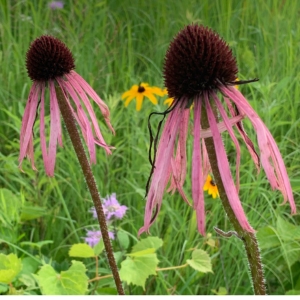
Purple coneflowers are found in prairie plantings all over the state, but they may not have been found historically in Wisconsin. Its relative, pale purple coneflower (Echinacea pallida), is a native Wisconsin species AND a threatened species in Wisconsin. As you might guess from its name, it is paler in color. It also has narrower leaves, petals that droop more, a more conical seed head, and white pollen. Purple coneflower has yellow pollen.