
Origins
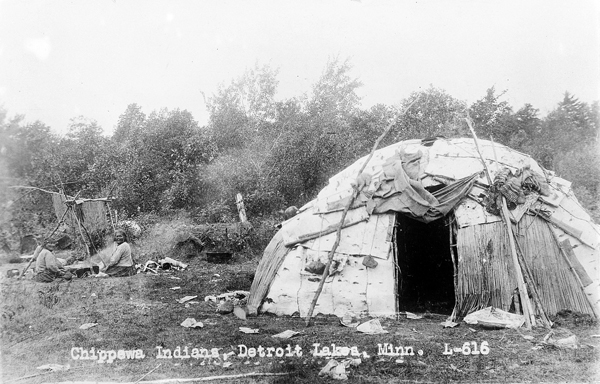
Native Peoples are the original inhabitants of North America, including the Great Lakes region. Native Peoples inhabited the continent tens of thousands of years before the arrival of explorers and settlers from other countries.
By the 16th century, the Native Peoples of North America had developed into widely different cultures or tribes. Tribes are traditionally highly organized, politically autonomous groups composed of families, clans, and bands. A family is part of a clan or several clans. A clan is part of a band. A collection of bands make up a tribe.
Notable tribes around the Great Lakes included people we now call the Ojibwe, Fox, Huron, Haudenosaunee (Mohawk, Seneca, Oneida, Onondaga, Cayuga, and Tuscarora), Ottawa, Potawatomi, and Sioux (Lakota).
Names are important
In the United States, Native Peoples are also referred to as American Indians, Indigenous Peoples, or Native Americans. In Canada, tribes are called First Nations.
Some researchers attribute “Indian” to the Spanish word "In Dios" (of/in God). Others believe the name originated with Christopher Columbus when he landed on the island of San Salvador during his explorations in 1492. He mistakenly believed that he had arrived off the coast of Asia (West Indies) and dubbed the people he found there "Indians."
Trade routes
The French explorers first visited Lake Huron in 1615, They found Native Peoples who had mastered their environment and were economically self-sustaining. The tribes living around the Great Lakes had established a network of overland trails and water routes that allowed them to move from their village sites to the resources that they needed for survival.
When the Europeans arrived, they brought implements of iron–-needles, fishhooks, hatchets, traps, and guns. Knowing that these things would make their lives easier, the Native Peoples began trading furs and skins for these iron implements. The pelts of fur bearing animals, especially beavers, were most sought after by the European traders.
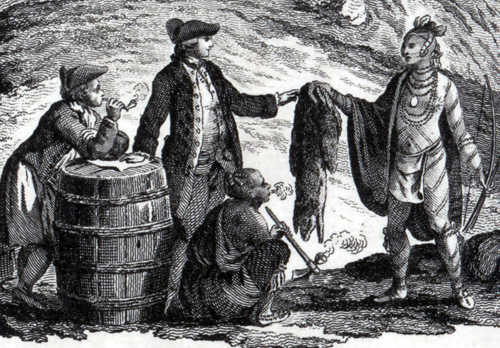
Many Native Peoples gradually shifted their traditional manners of meeting their needs and became dependent on trade. The trails and water routes that they used became the fur-trading routes. The Native Peoples of the upper lakes often traveled hundreds of miles by canoe down the Ottawa and St. Lawrence rivers to Three Rivers or Montreal, where they exchanged their furs for goods they desired.
Village sites and early fur trade centers at Green Bay (in present-day Wisconsin) and Chicago were places of importance to many Native Peoples in the Great Lakes region and were connected by well-established trails. These trails would later become the major highways of today. One ran southeast to Manitowoc Rapids, from where it followed the general course of the lakeshore. The other ran up the southern bank of the Fox River and skirted the eastern shore of Lake Winnebago to Fond du Lac at its southern end, eventually turning southeastward to Milwaukee and further south to Chicago. The present-day cities of Sault Sainte Marie and Mackinaw, Michigan, were other important trade centers.
Diseases, wars, and treaties
Relations between the Native Peoples and the European settlers varied. At first, fur-trading was much more important to the Europeans than acquiring land. But the Europeans introduced diseases that the Native Peoples had never experienced. With no immunity to the new viruses and bacteria, many Native Peoples died of diseases like smallpox, measles, and cholera. The Indians who survived war and disease were steadily and methodically pushed westward onto lands not yet settled by the Europeans. This pattern would persist for two centuries. After the War of 1812, American authority was absolute around Lake Michigan. Other regions, however, such as the U.S./Canada border area around the St. Marys River, were not completely taken over until the mid-1800s.
The remaining Native Peoples "reserved" land for their continued use. These "reserved lands," now commonly known as Indian Reservations and Trust Lands, were just one of many rights that the Native Peoples retained through a series of treaties with the American and Canadian governments.