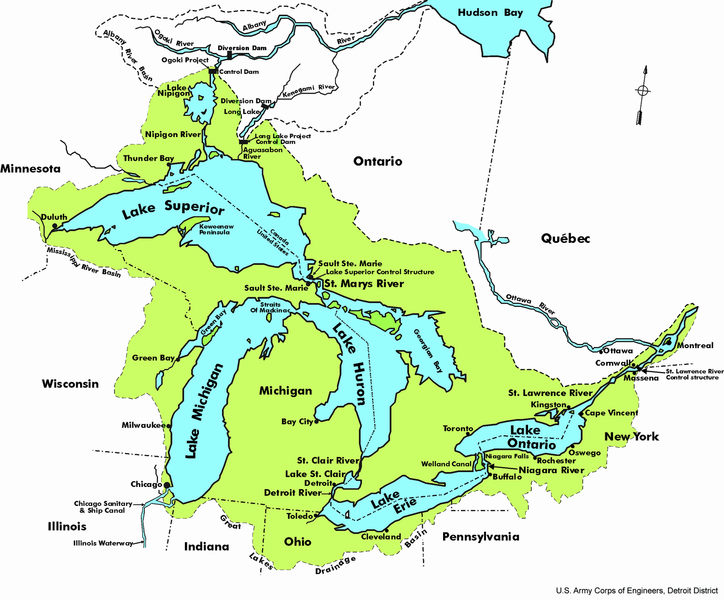
The Great Lakes-St. Lawrence River system is the world’s largest body of freshwater:
- It contains one-fifth of the world's surface freshwater.
- It borders two countries, eight states, and two provinces.
- Its basin encompasses more than 295,000 square miles in the United States and Canada.
- It includes 100,000 miles of navigable water.
- It is home to more than 33 million people.
Because of all the land, water, and people involved, Great Lakes policies are complicated. They are also difficult to develop and enforce.
Legislation within the Great Lakes basin involves the federal governments of the United States and Canada along with many sovereign American Indian nations. The differences between these governments creates difficulties when enacting binational and regional laws; however, regional cooperation and legislation is important in the Great Lakes basin. Water and air from both countries mix with each other, so the actions of each government affect the others. For example, Michigan could pass a law prohibiting industries from dumping a certain toxic chemical into Lake Erie, but if Ontario, Ohio, Pennsylvania, and New York don’t pass the same law, then the water quality of Lake Erie will still suffer. A regional approach is difficult to manage, but it has been accomplished in the past.
To work together, the various governments of the Great Lakes region have implemented several agreements and established organizations that help to manage and protect the Great Lakes as a whole. Here are some of them:
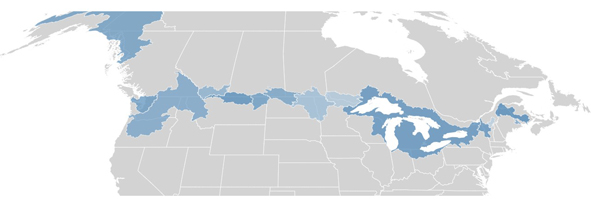
In 1909, the Boundary Waters Treaty was signed to help prevent and resolve disputes concerning water quantity and water quality along the shared boundary between Canada and the United States. As a result of the treaty, the International Joint Commission (IJC), was created as an independent binational organization responsible for carrying out the treaty.
The IJC recognizes that each country is affected by the other's actions in the lake and river systems along the entire border, including the Great Lakes. The IJC is charged with regulating shared water issues, improving water and air quality in the region, investigating issues, and recommending solutions.
Every three years, the United States and Canada provide progress reports on the actions recommended by the IJC. The IJC researches the progress outlined in the reports and independently assesses the progress reported by the two governments. Through this process, the IJC monitors and seeks to improve a wide range of water uses, including drinking water, commercial shipping, hydroelectric power generation, agriculture, ecosystem health, industry, fishing, recreational boating, and shoreline property.
The federal Indian trust responsibility requires the United States to protect tribal treaty rights, lands, assets, and resources. This doctrine actually dates back to 1831 when Chief Justice John Marshall first spoke of it. Over the years, the Federal Trust Relationship has been upheld in numerous Supreme Court cases, including the case of the Seminole Nation v. United States.
The Federal Trust Relationship with tribes is a legal doctrine where-in which, due to established Treaty negotiations largely held in the 18th and 19th centuries, the Federal Government has acknowledged that they act as Trustees to the tribes which also serves as the basis for Government-to-Government consultation between Tribes and the Federal Government. Often, many Federal, State, and Municipal agencies lack greatly in the knowledge of the workings of this relationship and thus tribes are often left out of decision-making. See the Great Lakes Charter below..
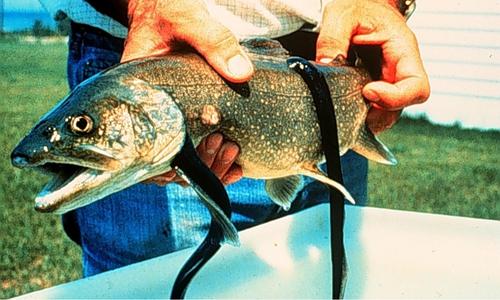
The United States and Canada tried several times to cooperate on managing the fish in the Great Lakes. Their efforts failed until an explosive population of non-native sea lamprey threatened the entire Great Lakes. In 1955, the two governments ratified the Convention on Great Lakes Fisheries, which created the binational Great Lakes Fishery Commission. The Commission's main responsibilities include developing coordinated programs of research and recommending measures, promoting the productivity of Great Lakes fish populations, and formulating and implementing programs to control and eliminate Great Lakes sea lamprey populations.
Canada and the United States signed the Great Lakes Water Quality Agreement in recognition of the urgent need to improve water quality in the Great Lakes. In 1978, the agreement was amended to include toxic contamination. The Agreement evolved into an ecosystem approach, recognizing the importance and interconnectedness of all components of the environment: water, air, and land. The agreement includes a number of objectives and guidelines to achieve these goals, such as the elimination of toxic chemicals in Great Lakes waters, financial assistance to construct wastewater treatment facilities, and the development of best management practices to control most sources of pollutants. Many binational programs have been developed out of the agreement, such as the Great Lakes Binational Toxics Strategy and the State of the Lakes Ecosystem Conferences. The United States Environmental Protection Agency (EPA) coordinates U.S. activities under the Agreement.
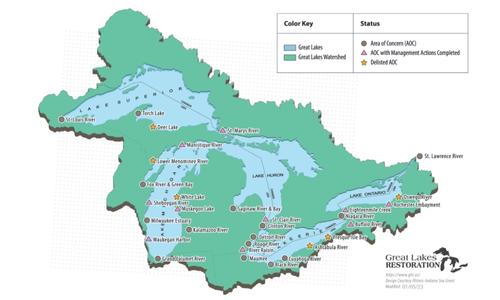
In 1987, the governments of Canada and the United States signed a protocol to the agreement which identified 43 Great Lakes Areas of Concern (AOCs). AOCs are environmentally degraded areas along the Great Lakes shoreline in need of immediate remediation. The protocol directs the two federal governments to cooperate with state and provincial governments to develop and implement Remedial Action Plans for each Area of Concern.
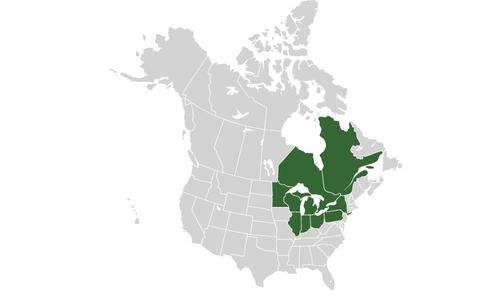
The Great Lakes Charter is a good faith agreement between the Great Lakes governors of the U.S. states of Illinois, Indiana, Michigan, Minnesota, New York, Ohio, Pennsylvania and Wisconsin, and the premiers of the Canadian provinces of Ontario and Quebec to work together in preserving the integrity of the Great Lakes. Some of the goals of the charter include preserving the water levels and flows of the Great Lakes, protecting the Great Lakes basin ecosystem, and providing a secure foundation for future investment and development within the region. The charter promotes standardized data collection procedures across the Great Lakes states and provinces and consultation on a regular basis on the issues of water use, conservation and development.
The U.S. and Canadian governments signed the Air Quality Agreement to address shared concerns regarding transboundary air pollution. Air pollution, like water, knows no borders, and the agreement was made in hopes of protecting the health of citizens and ecosystems on both sides of the border. The agreement lists specific goals for each of the countries concerning emissions limitations for certain toxic chemicals and transportation vehicles.
The Ecosystem Charter for the Great Lakes-St. Lawrence Basin is a good faith agreement between Great Lakes organizations that promotes an ecosystem approach to management, recognizing that the goals for environmental protection and economic development within the basin are linked and interdependent. The Charter ties a common thread through the many policies, laws, and agreements in the basin, and explicitly defines objectives for an ecosystem approach to management.
Brush up on your knowledge of how governments work:
- United States government - You can also watch Schoolhouse Rock!
- Canadian government
Read the latest International Joint Commission reports.
Read about the Federal Trust Responsibility.
Find out more about how the Great Lakes Fishery Commission works to protect our shared fishery.
Find out how the Conference of Great Lakes and St. Lawrence Governors and Premiers collectively tackle the environmental and economic challenges facing the citizens of the region through the Great Lakes Charter.
Read about how the Great Lakes Commission coordinates the Ecosystem Charter for the Great Lakes.
Visit the United States Environmental Protection Agency (US EPA) website to learn more about how our two countries work together to restore and protect the air and waters of the Great Lakes through the: