
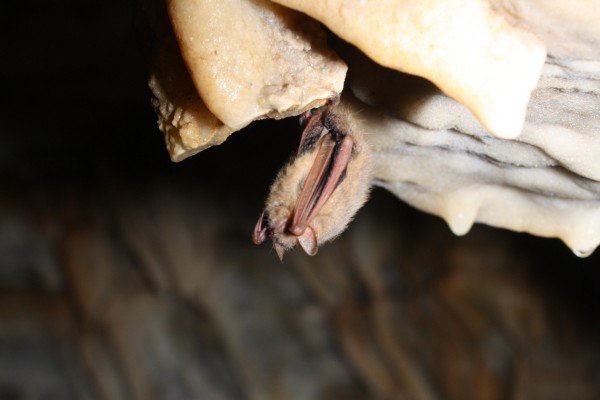
There are eight species of bats in Wisconsin. All of them are insectivores. Four of them are cave bats. Four are tree bats. All of them are in trouble.
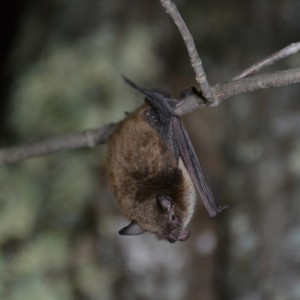
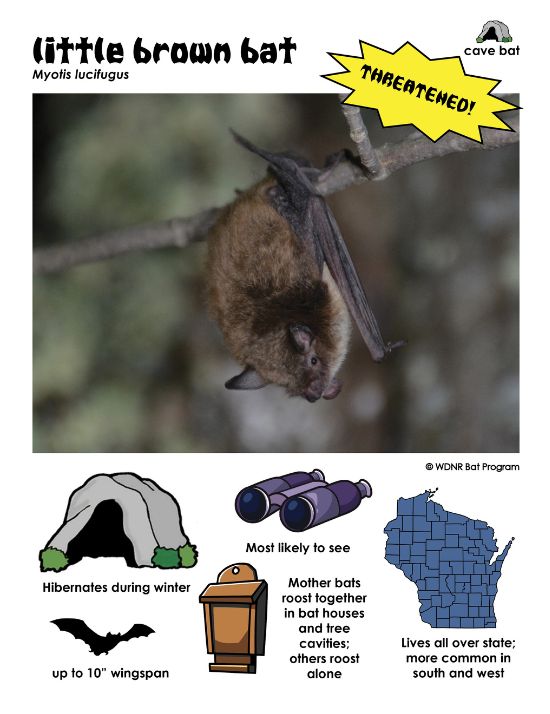
Little brown bat
Myotis lucifugus
Little brown bats are . . . little bats! They have glossy brown fur on their backs with lighter-colored fur on their bellies.
During the summer, they usually stay close to water and hunt for mosquitoes, flies, moths, wasps, and other insects.
During the day, they rest in tree hollows and buildings.
In winter, they hibernate in caves or abandoned mines.
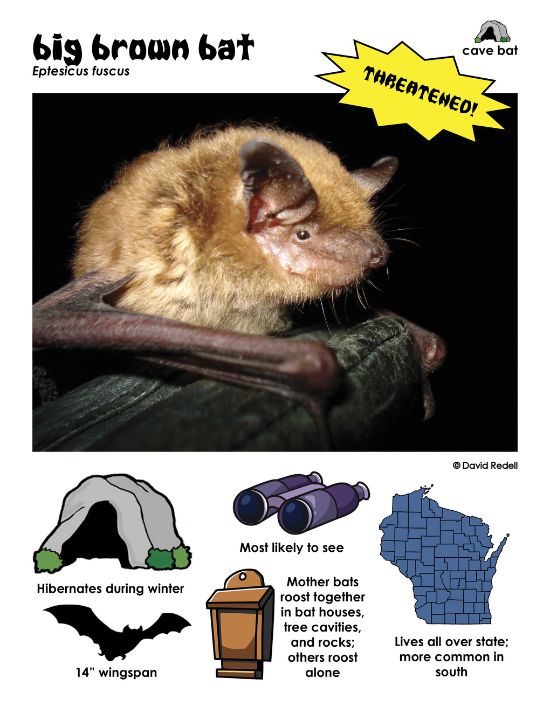
Big brown bat
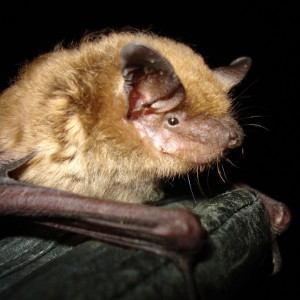
Eptesicus fuscus
Big brown bats look a lot like little brown bats except they are bigger! In summer, they roost in tree hollows, wall spaces, and buildings.
Big brown bats usually look for food while flying over fields, field edges, and shorelines. They eat a lot of insect pests!
In winter, they hibernate in caves and abandoned mines. Big brown bats can survive in cooler conditions than other bats. Sometimes they hibernate in the walls and attics of buildings.
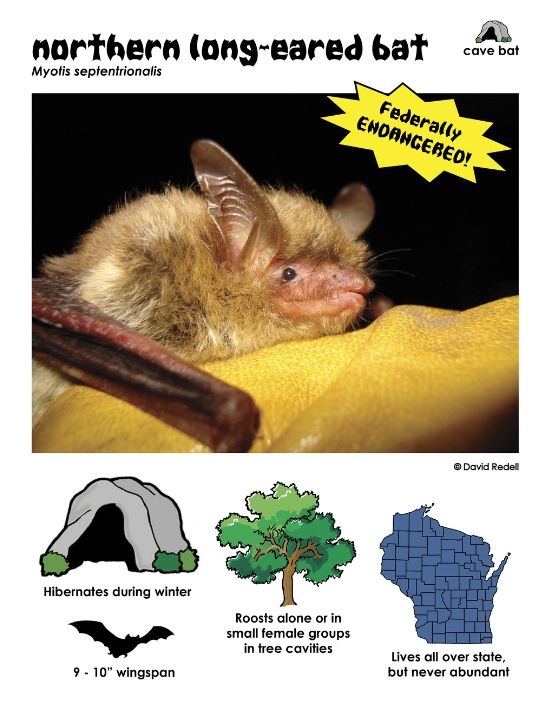
Northern long-eared bat
Myotis septentrionalis
Northern long-eared bats look like little brown bats, but their ears are a lot longer. These long ears help them hear prey as they fly through forests hunting for flies, beetles, and moths.
In summer, they rest under tree bark or in tree cavities.
In winter, they hibernate in abandoned mines and small caves. While little brown bats hibernate in groups, northern long-eared bats tend to hibernate alone
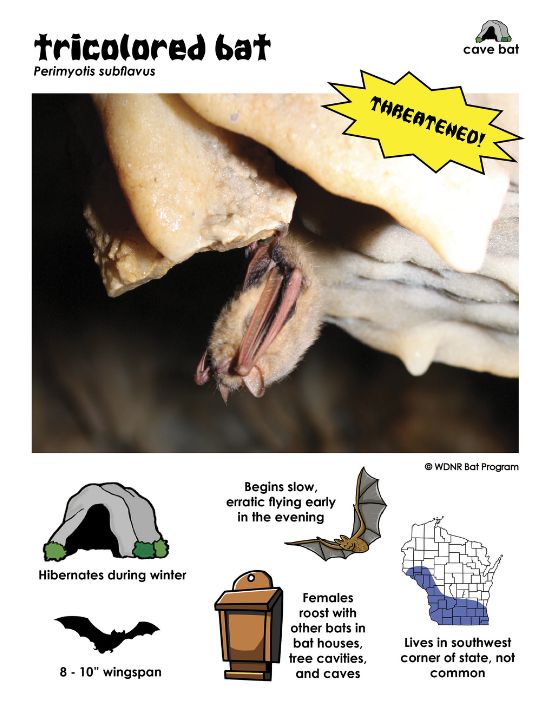
Tricolored bat
(formerly eastern pipistrelle
Perimyotis subflavus
Tricolored bats are Wisconsin's smallest bats. Their name comes from the bands of colors on each hair of their fur.
These bats begin flying early in the evening with a slow, haphazard flight pattern. They eat bugs, beetles, flies, and moths while flying over water and the edges of fields.
They are usually the first bats to enter caves and mines to hibernate. In spring, they are usually the last to leave hibernation. They hibernate alone and rarely form clusters of hibernating bats.
Evening bat
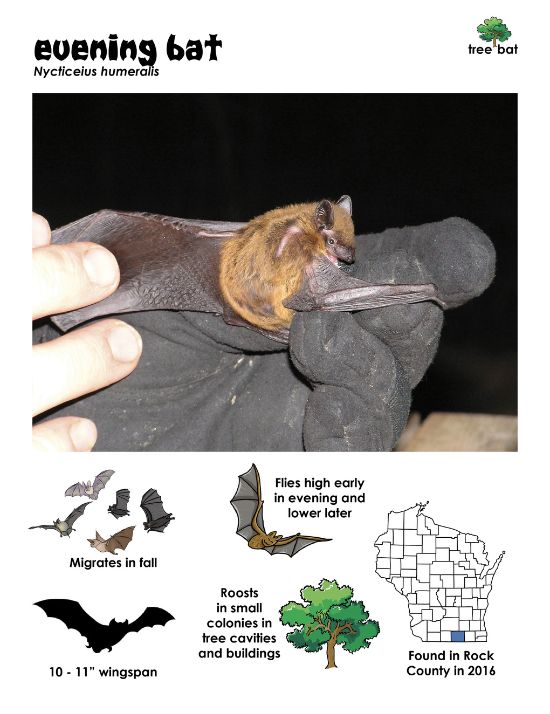
Nycticelus humeralis
Evening bats look very similar to little brown bats and big brown bats. They were first found in Wisconsin in 2016.
In summer, they live in deciduous and conifer forests and eat beetles and bugs. Some of the insects they eat are serious pests.
In winter, scientists believe that they migrate south. There is still a lot ot learn about evening bats in Wisconsin!
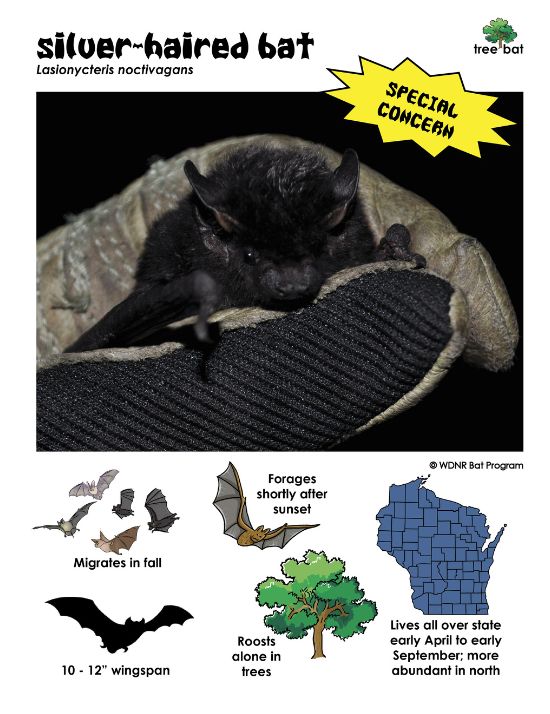
Silver-haired bat
Lasionycteris noctivagans
Silver-haired bats have black to dark brown fur that looks like it is frosted with silver tips. They are medium-sized bats.
In summer, they live in wooded areas and feed on moths, flies, and beetles. They usually rest alone under tree bark and in tree cavities.
In winter, they migrate south and hibernate in tree crevices and tree hollows.
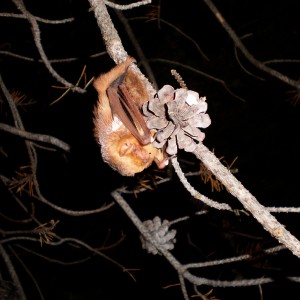
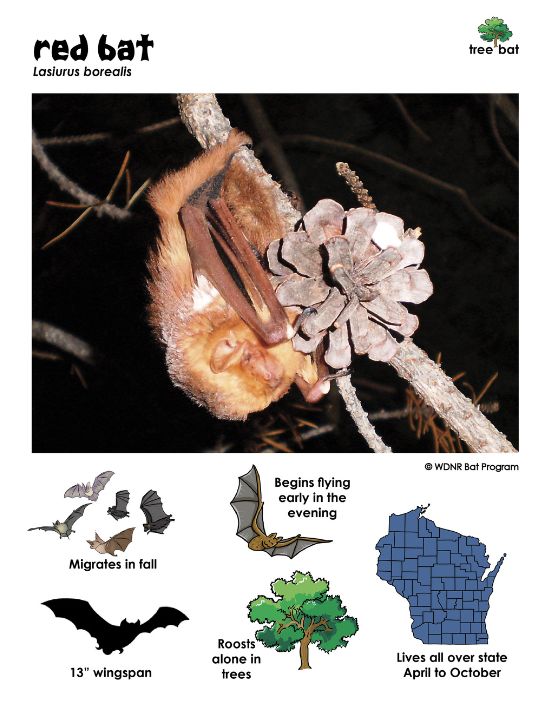
Eastern red bat
Lasiurus borealis
Red bats are the only bats in Wisconsin with reddish fur. When they hang upside down from tree branches, they look a lot like dead leaves.
In summer, they hang out in deciduous forests and eat moths, bugs, and beetles.
In winter, they migrate south where they hibernate in tree cavities or leaf litter. They usually live alone.
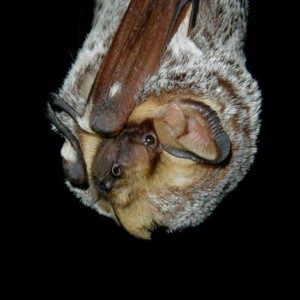
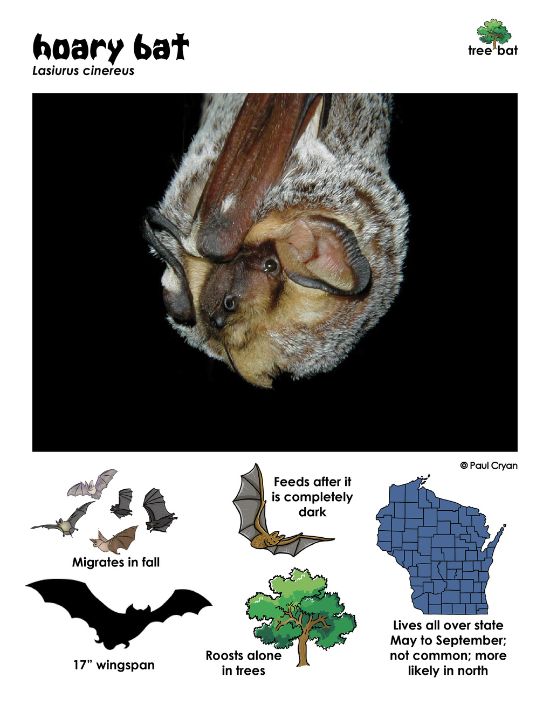
Hoary bat
Lasiurus cinereus
Hoary bats are Wisconsin's largest bats. Their fur is tipped with white so that they look like they are covered in frost.
In summer, they live in deciduous and evergreen forests and feed on moths. Their echolocation calls are low enough that some people can hear them calling--especially kids!
In winter, they migrate long distances to where the weather is warm.
Read about bats!
If you like bats, you should visit Story Edventures and find out about the book, Batty for Change by Kristin Halverson. You might even be inspired to learn more about bats, or build a bat house, or adopt a bat.
Check out the "For adults" tab at the bottom of Batty for Change for teaching resources related to bats.