Common name: striped skunk, stink cat, polecat, smell cat
Scientific name: Mephitis mephitis
Striped skunks are common in Wisconsin, but rarely seen. They're not very aggressive and typically plod along minding their own business during the night. But, if you see one, it's best to quietly move away so you don't become a victim of this "stinky cat."
You should also steer clear of skunks because they carry rabies and can transmit it to other animals.
How to identify a striped skunk
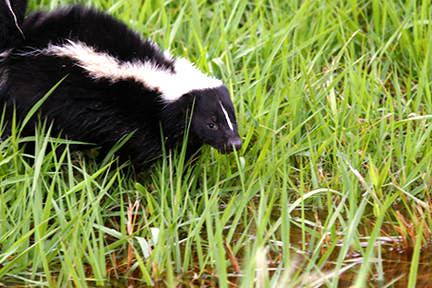
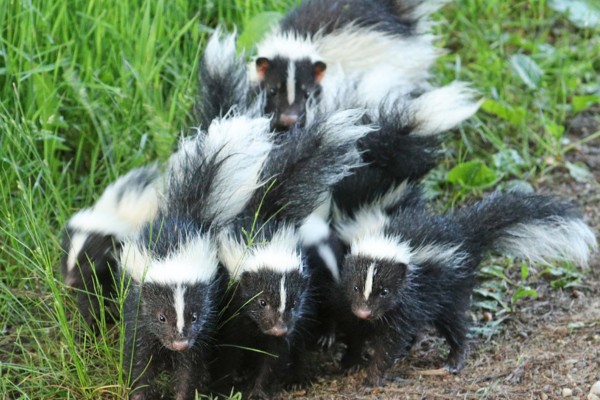
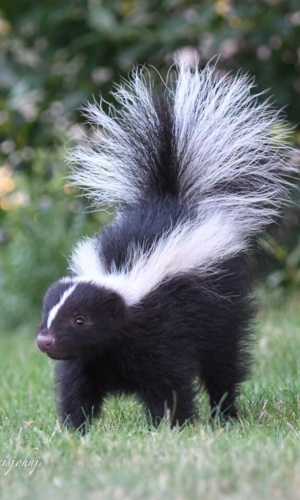
This mammal is the size of large house cat. Striped skunks have black fur with bold white stripes from head to tail. The tail is long and bushy, with long white and black fur. A white triangle can be seen on the face starting at the forehead and pointing down like an arrowhead to the nose.
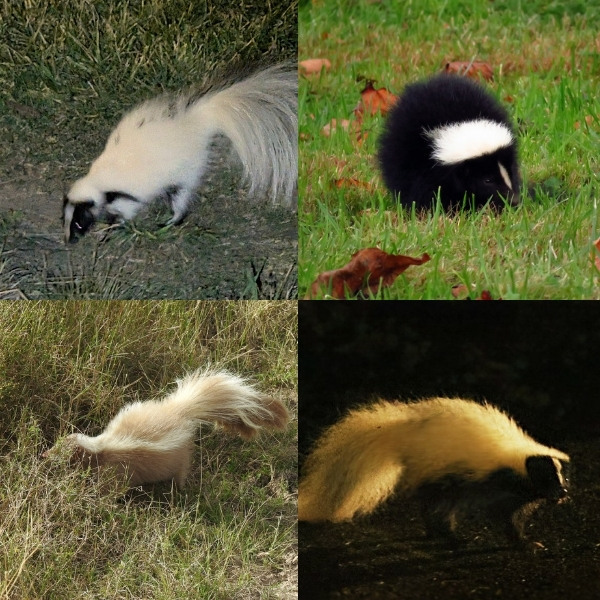
Be aware that not all skunks look the same! Check out these variations!
How to identify skunk tracks
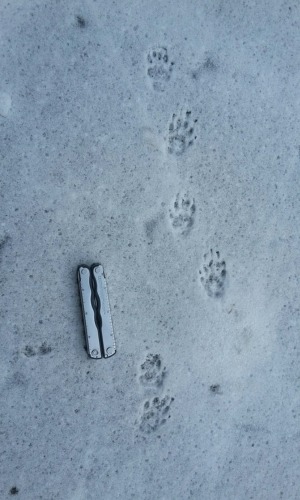
Skunks have short legs and waddle when they walk. They move the front and back legs on one side of their body followed by moving the front and back legs on the opposite side. If you get down on your hands and knees and try to crawl by moving your body in this way, you will understand why they waddle.
They leave a very distinct angled track pattern when walking. Because skunks have a powerful defense, they rarely move fast.
Where they live
Skunks live in farmlands, woodland edges, and brushy areas along streambanks and ditches.
In late fall, they will create a den or remodel the den of another animal. Look for dens in warm, cozy places like caves, rock openings, fencerows, hollow stumps, or fallen logs. They may build dens under a porch, wood pile, or stack of building materials—so watch out!
Skunks don't hibernate, but they do stay in their dens during most of the winter. In bitter cold weather, several skunks might den together to conserve energy. If you are walking near an occupied den, you can sometimes catch a whiff of skunk.
What they eat
Skunks are opportunistic omnivores, meaning they will eat most anything they find. They eat:
- Bees, crickets, grasshoppers, beetles, cutworms, and other insect larvae. You can tell if a skunk has been looking for food in your yard. Look for roundish holes that are 3 – 4 inches across and 1 – 2 inches deep. They make these holes with their claws and noses as they dig.
- Small mammals like mice, rats, shrews, moles, and ground squirrels.
- Eggs
- Plants, especially fruit, in the summer. Don't be surprised if they nibble at your garden vegetables and fruits.
- Carrion, garbage, pet food left outside, and birdseed
Who eats them
Skunks have a stinky defense system! They have two musk-filled scent glands on either side of the anal opening. When disturbed or threatened, they can spray musk at predators as far as 15 feet away. The smell can carry for a mile! And, as if the overpowering smell isn't bad enough, the musk can also burn eyes and cause temporary loss of vision. Not much fun for an unsuspecting predator. The stinky smell is hard to get out of fur, feathers, hair, and clothes.
Only a few birds of prey, such as great horned owls and barred owls, will capture and eat skunks. A young coyote might try to capture a skunk, but it quickly learns the hard way to leave this critter alone. Skunks are frequently killed on roadways.
How they reproduce
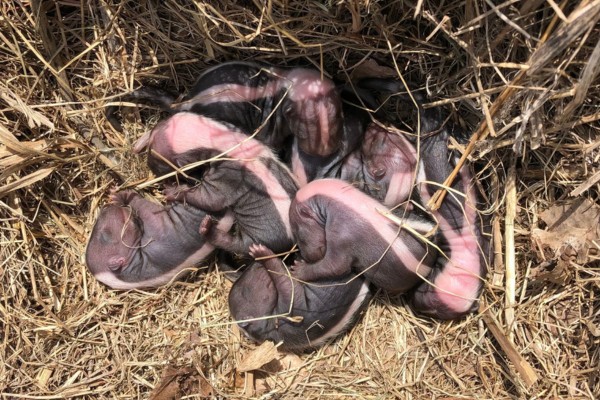
Skunks mate in late winter to early spring. A male skunk often has a harem of female skunks that he defends from other males. Once the mating season is over, the male skunk leaves. The female gives birth to a litter of two to twelve kits in her den in May or June. The babies are born with very little fur and unable to see. When they are about two months old, they leave the den and follow their mother as she forages for food.
Did you know?
A skunk’s spray is an amazing defense, but it is a last resort. Once the skunk releases its spray, its musk glands are empty, and it is defenseless for almost ten days while the musk glands refill.
If you encounter a skunk, it is good to be familiar with the warning signs it will give BEFORE it sprays. The first warning sign is the skunk’s bold black and white fur. Simply seeing a skunk should tell you to go the other way. If you see a skunk doing any of these things, you are way too close! Slowly back away.
- Hissing or growling
- Foot stomping
- Charging forward and backing away
- Tail raising
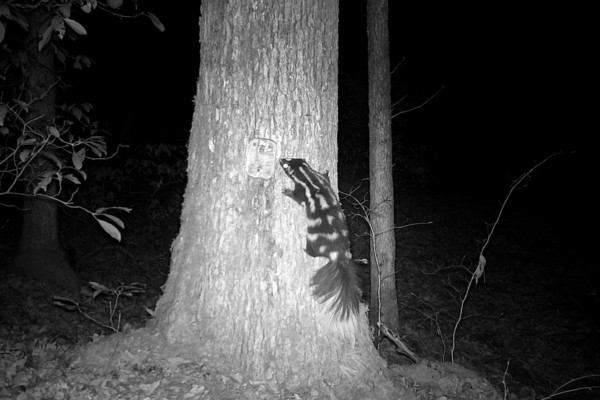
The striped skunk has a close relative, the spotted skunk, that once lived in the southwestern corner of Wisconsin. No one has seen a spotted skunk in Wisconsin for a long time.