The cultures of Wisconsin’s First Nations are rich and diverse. The following is just a snapshot. Ask your grownup to visit some of the resources under the “For adults” tab for a closer look.
Boozhoo!
That's the Ojibwe word for “hello." It is derived from a cultural hero named Nanaboozhoo. The word is used to find out if someone speaks a similar language, which might make them an ally.
Some people have claimed that this word originated from the French word, “bonjour.” But this is not true. Records kept by the early Jesuit explorers tell the story of meeting Ojibwe and being surprised that the words for “hello” were so similar in their different languages. These early records also make it clear that the Jesuits knew the words were completely separate words.
Over the years, many Ojibwe words and beliefs have been adopted, misused, and changed. It is important to be sure that all cultures are respected and honored by being as accurate as possible.
More examples of the Ojibwe language
- nibi (water)
- ma'iingan (wolf)
- animosh (dog)
- gaazhag (cat)
- omakakii (frog)
- amik (beaver)
- esiban (raccoon)
- zhigaag (skunk)
Today, in the United States and Canada, there are a few thousand speakers of the Ojibwe language. Through stories, songs, and other efforts, the Ojibwe are working to revitalize their language so that it remains a living language spoken in day-to-day doings.
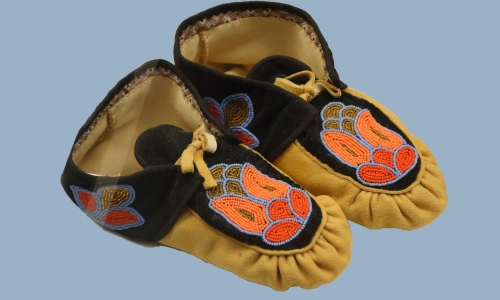
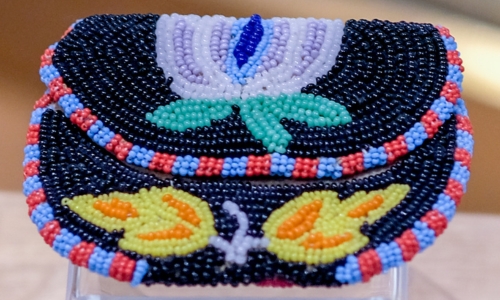
Handsewn moccasins, other leatherwork, and ornate quillwork designs (made from porcupine quills) are common among the Great Lakes tribes. These designs are also created with glass beads. Other beadwork patterns came from nature or French cloth.
Picture writing around Lake Superior
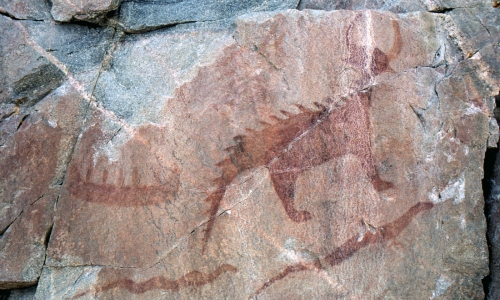
Even today, you can see the picture writing of the Chippewa tribe on the towering cliffs along the waterways of northeastern Minnesota and in Ontario's Lake Superior Provincial Park. These pictographs have also been found on slate, copper, lead, and birch bark throughout the region. According to Ojibwe tradition, the Great Spirit gave this record of events to the Native Peoples after a great flood, and wise men spread the story throughout the country through their picture writings.
Here are some interpretations of picture writing:
- circle with a dot in the center = spirit
- plain, empty rectangle = great
- human foot = passed
- empty circle = life
- black circle = death
- turtle with head and tail extended = land
It is important to note that the Ojibwe have always had systems of recording their traditions and history. Many of those systems are greatly individualized. The above meanings of picture writing are one example of what the symbols could mean.
Inscription rocks on Kelleys Island
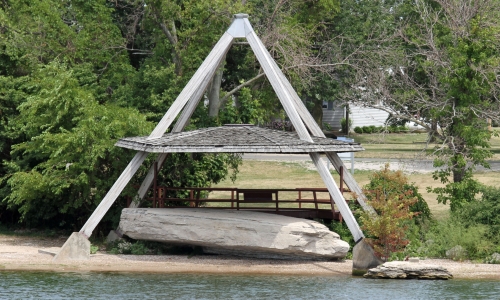
On the north shore of Lake Erie, pipe-smoking figures are carved in the rock. Other drawings depict an Indian chief, his pipe, his various instruments of spiritual practice, a journey on snowshoes, a road, serpents, feathers, war clubs, and articles of leather worn by chieftains. Interpreters say these carvings tell the story of the Erie Indians, their occupation of the islands, the coming of the Wyandot tribe, the invasion of the Iroquois, and the evacuation of the Erie from their temporary home early in the 17th century. These drawings help to remind us of their presence on the land.
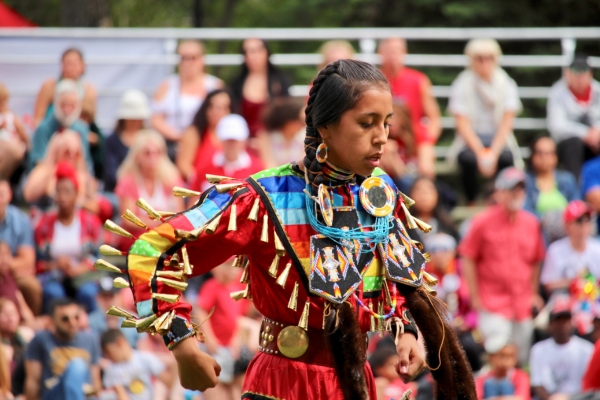
In the Great Lakes-St. Lawrence tribes there are several varieties of dance which have survived into the present day. The Jingle Dress Dance for healing began around the time of the Spanish Flu in the early 20th century and is perhaps one of the most recognizable dances still commonly practiced today.
In this video, Brenda Child, shares how her family history led her to research the history of the jingle dance.
Ojibwe Manidoog
(Spirits/Beings that can control cause and effect)
- Nanaboozhoo (also Nanabush, The Great Hare, Manaboju, The Great Trickster) - This prominent figure in Ojibwe oral tradition supposedly taught the Ojibwe all their chief social functions, including hunting, fishing, canoe building, and face painting.
- Gichimanidoo (also Gitchee Manito) - The Supreme Being; the Creator; the Great Spirit.
- Mishibizhiw - A manidoo that is made up primarily of copper and protects the copper/waters of the lakes and rivers.
- The Winds - The other four spirits (four is an important number among the Ojibwe) are the East, West, North, and South winds.
Explore tribal lands using this interactive map.
Play Growing Up Ojibwe: The Game. You take the role of Tommy or Annie Sky, an Ojibwe youth, sent on a mission by their grandmother to learn important knowledge that has been forgotten by many. You can play it here.
Learn more about the Ojibwe language and listen to native speakers keeping their language alive.
Share some Ojibwe stories with your child. Here is one about Manabozho and the Maple Trees.
Enjoy stories on language and culture from native communities around the central Great Lakes
Listen to a Ho-Chunk elder share a bit of his tribal history.