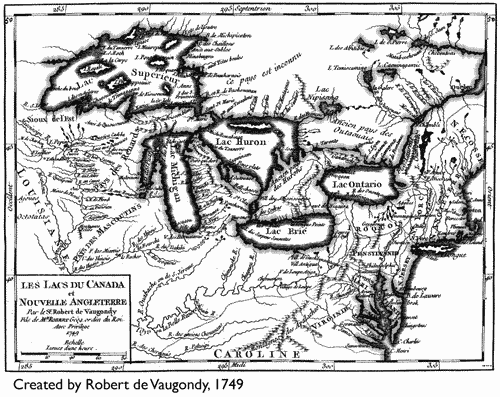
Common meanings of tribe names are in parentheses.
Anishinaabe
(the Original People or People Lowered onto Earth or First People)
The self-designation of the Chippewa/Ojibwe, Ottawa (Nishnaabe) and Potawatomi (Neshnabé).
Chippewa
(an alternate pronunciation from French, also sometimes spelled in French as "Outchibous," later "Otchipwe"; true meaning is related to either “Ones that use writing,” “Ones that make lodges,” “Ones that came before,” or “Ones that come from the rapids.”)
Living extensively along the shores of lakes Superior, Michigan, and Huron. Some counts say there were more than 12,000 Chippewas in the vicinity of Lake Superior at the height of their population. Predominantly known in Canada as "Ojibwe" (also Ojibwa, Ojibway), the Chippewa are the largest Algonquian-speaking tribe of North American Indians. The Chippewa drove the Sioux west onto the Plains, drove the Fox south and held off the Iroquois. In error, Longfellow based his poem "Hiawatha" on Chippewa stories, even though the major character was Iroquois. Today, Chippewa bands remain in Wisconsin, Minnesota, and Michigan. Also today, many people of this tribe prefer to be called Ojibwe.
Cree
(a shortened/altered form of the Ojibwe term “Ginistinoo” which the French changed to “Cristineaux” and further shortened to “Cree.” The original etymology of the Ojibwe term relates to the populations of this tribe that the Ojibwe came in contact with who were Christian converts as recorded by the French.)
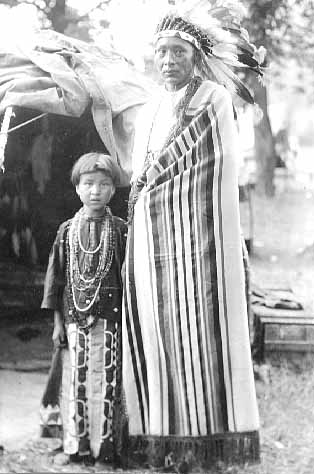
Closely related to the Chippewa, the Cree range from James Bay to the Saskatchewan River in Canada.
Dakota/Sioux
(ally, friend)
Migrants from the Minnesota/Wisconsin and Upper Mississippi regions, the Sioux are one of the largest tribes of North American Indians. They are noted for their military prowess.
Huron
(from the French "Hures" (meaning boars) possibly referring to the way the tribe styled their hair)
This small confederation of Iroquoian-speaking tribes once occupied the St. Lawrence Valley from Lake Ontario to Georgian Bay. After being severely reduced by the Iroquois, surviving members of the Huron tribe settled in Ohio and became known as the Wyandot.
Iroquois
(rattlesnakes or real adders, they called themselves the "Haudenosaunee" or People of the Longhouse)
This formidable, highly organized tribe controlled the two lower lakes (Erie and Ontario) and the portages between them. There was no nation or combination of tribes in the Ohio or Lake Erie country comparable to the organized Iroquois between the Niagara and Hudson rivers. The Iroquois are well-known for their unique housing design, called the longhouse.
Menominee
(wild rice people)
Driven westward in the 17th century from their earlier homeland, this tribe settled in present-day Wisconsin along the Menominee River in about 1634 and here they remained for more than 200 years. In a treaty made with the government in 1831, they claimed ownership of the country as far south as Milwaukee, but other tribes claimed the same area. They were given a reservation on the Wolf River, comprising a portion of their ancient homeland, and here they remain. Chief Tomah was a notable member of the Menominee tribe.
Mesquakie/Fox
(the red earth people)
This Algonquian-speaking tribe inhabited south-central Wisconsin.
Miami
(original name of “Myaamia,” referring to ally or friend, cry of the crane (from a different word, "twightwee," their self-designation))
Several bands of this tribe settled around Chicago, Illinois, in 1690.
Missouri
(people with wooden canoes)
One of the Nations of the South (also Illinois, Osage, and Potawatomi).
Mohican/Mahican
(wolf people)
Inhabiting the upper Hudson River in New York and east to Connecticut with current presence in Wisconsin, Canada, and the Eastern United States.
Ojibwe
See Chippewa.
Oneida
(boulder standing up, people of the standing stone)
With homelands near Lake Oneida in New York State, the Oneida were the smallest but most warlike tribe of the Six Nations of the Iroquois. Surviving members today live in New York, Ontario, and northeast Wisconsin.
Ottawa
(to trade, traders)
Originally they lived north of the Great Lakes in the present-day province of Ontario with the Potawatomi and Ojibwe. The Ottawa Indians were famous traders and island dwellers by the time French settlers arrived.
Potawatomi
(literally “we are making a fire,” with the duty of being keepers of the sacred fire)
Another tribe of the Algonquian linguistic family, this tribe originally was one with the Ottawa and the Ojibwe. They are known primarily as hunter-farmers. They migrated as far as Indiana, Illinois, and Wisconsin before the white settlement and the Federal Government drove them west. There were large Potawatomi settlements in southwest Michigan (Niles), Detroit, and Wisconsin (Green Bay, Milwaukee).
Sauk/Saques/Sac
(people of the yellow earth, people of the outlet)
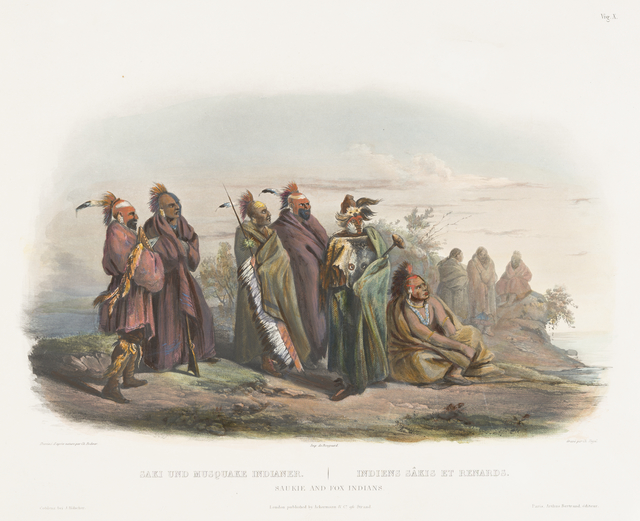
Original occupants of the Saginaw Bay region of Michigan, the Sauk are closely related to the Mesquakie, Potawatomi, and Kickapoo peoples.
Winnebago
(from the Potawatomi word "Winbyégo," People of the Dirty Water)
This tribe resided in the Fox Valley around Wisconsin's largest lake (Lake Winnebago) for more than 200 years. They were expelled from their homeland toward the middle of the 19th century. An early name for Lake Michigan was "Lake of the Stinking Water" or "Lake of the Puants." It was named after the Winnebagos and other tribes who occupied its shores, though this should be cleared up now regarding the conflation of name origins. Today, the Winnebagos have officially changed their name to the Ho-Chunk Nation, which means "People of the First Voice."