Welcome to Story Edventures!
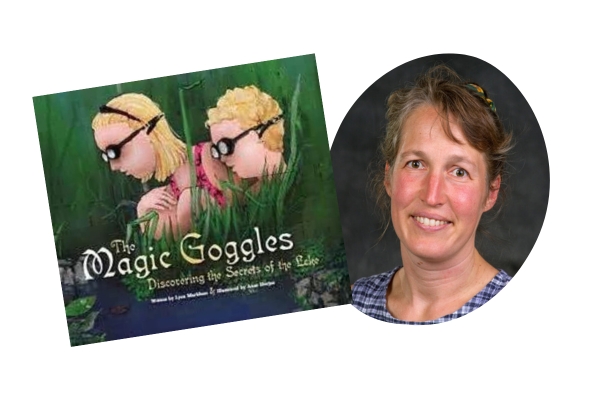
Magic Goggles: Discovering the Secrets of the Lake by Lynn Markham takes you under the water and over the water to discover lake habitats. After you read the story, you’ll want to find the nearest lake to do some exploring on your own.
Enjoy this reading of the story.
Connect
Explore
Find a pond, lake, or stream to explore. Check out nearby parks or nature centers for different kinds of aquatic ecosystems.
Make an aquascope. You might not have a pair of magic goggles, but you can make an aquascope. Check out these simple directions.
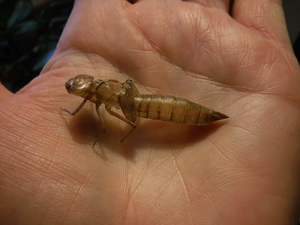
Identify lake macroinvertebrates. Damselfly larvae don’t look much like adult damselflies. After hatching out of their eggs, they live the first part of their lives as underwater nymphs. They eat and eat, molting their old skins as they grow. The last time they molt, they emerge as adult damselflies with wings. They are not alone! There are many insects that begin their lives underwater as larvae. Use the Water Critter Key to figure out what lives in the water you are exploring.
Engage
Maggie and Tate heard about how important shoreline habitats are from a duck that lived there. You might not get to talk to the animals, but you can learn how to protect and improve the habitat around lakes and streams from human experts.
Join a spring clean up. Most trash eventually ends up in a river or lake, harming aquatic organisms. Do your part by: not littering, being sure your family properly disposes of oil, old paint, and other harmful liquids, recycling (including electronics), and picking up trash. If there isn't a community clean up in your area, could you start one?
Raise awareness. Help your community understand the importance of protecting local waterways by writing a short story, poem, or article for your local newspaper. Share your bird’s eye view of the pond to help people understand how our actions affect our wild neighbors.
Adopt a shoreline. Restore a shoreline in your area by working with local nature centers or park departments. Begin by researching what a healthy shoreline in your area looks like. Talk with specialists to make a plan to remove invasive species and plant native trees, shrubs, and perennials. Keep good records about what you did by collecting and recording data!
About the author
Lynn Markham, is a Shoreland Specialist with Wisconsin Extension. She helps Wisconsin communities who want to protect lakes, streams, and drinking water...which are all connected. Lynn has written lake books for big people and little people. She loves swimming, snorkeling, and exploring lakes with her kids, Tate and Tessa. Check out her other book readings, including Fish Hotel and Magic Goggles. Lynn also has a wonderful field journal and mini-book on Fish Hotels that go along with her books.
Resources for educators. Check out these Magic Goggles extras!
- Slide presentation focusing on the book and shoreland habitat.
- Related books to keep kids reading!
- Bookmark blanks to connect to the reading and encourage more reading :)
- Magic Goggles Leader Guide with great questions, vocabulary, additional activities, and more!
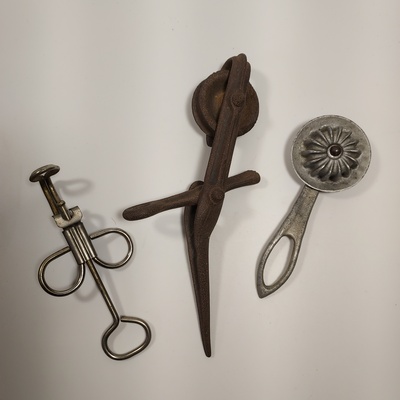
More about inventions! If you find an old gadget or tool, look for a US Patent number. You can look up these numbers on the US Patent website and read the original patent application. In 1845, Sarah Mather submitted a patent application for her aquascope. (Leaves EEK!)
More about shorelines. Learn how Shoreland Zoning helps protect water quality, fishing, and home values in a short animated video from the Center for Land Use Planning. (Leaves EEK!)
Places to visit. To locate public lands that your family can visit and explore, open Wisconsin DNR’s Public Access Mapping Application. (Leaves EEK!)
Books, books, books! Consider supporting nature-based authors, many with roots in Wisconsin or the Midwest, by adding featured Story Edventure books to your home, school, or community libraries. If you purchase from our Bookshop a percentage of your purchase will benefit FIELD Edventures. (Leaves EEK!)