

Welcome to Story Edventures!
The Monarch’s Gift by Stephanie Feuerstein allows you to see the world through the eyes of a monarch butterfly. Though the butterfly visits many beautifully-illustrated and scientifically-accurate native flowers, she is looking for a particular one for a special reason. You will learn about the lifecycle of the monarch butterfly and how you can invite this incredible creature to live in your neighborhood.
Connect
Monarch butterflies begin life as tiny eggs, hatch out as caterpillars, enter into chrysalises, and emerge as adult butterflies. This video from Canada shows the entire lifecycle, including some pretty amazing footage of caterpillars entering the chrysalis stage and adult butterflies emerging from their chrysalises.
Explore
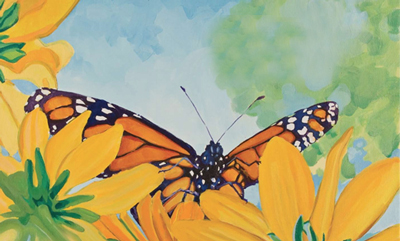
Take a hike. The book is filled with beautiful flowers! Take a hike around the block or visit a nearby nature center. What do you notice? Are there any flowers blooming? What colors do you see? Take a close look. Do you see any insects or other animals on the plants? Look for nibbled leaves. Peek under leaves and inside flowers. Did you remember to bring your nature journal so you can take notes and sketch the things you observe?
Search for milkweed. Monarch caterpillars are picky eaters. Some caterpillars will eat a variety of plants, but not monarchs. They will only eat milkweed leaves. Check out a field guide to wildflowers from the library and head outside to look for milkweed plants. Find out more about milkweed.
Engage
Plant a butterfly garden. The monarch visited a rainbow of colorful flowers to sip nectar as she was searching for just the right one. What would that monarch find if she visited your neighborhood, your garden, or your backyard? Consider planting native flowering plants to provide nectar for butterflies. In addition to milkweed, try to offer a variety of flowers that bloom from early spring to late fall. You don't have to plant a big garden! Even a flower pot on a balcony can give a butterfly a sweet burst of energy from nectar! Check out butterfly gardening for more ideas.
Raise monarchs. Monarch eggs, caterpillars, and chrysalises face many challenges. You can help by finding eggs and raising them to adults. Do your research! You will need to be sure you can find good containers, keep things clean, provide a LOT of milkweed for the hungry caterpillars, and watch carefully to release the adults when they are ready. Ask your grownups to help!
Raise awareness. Whether you are an artist, a writer, a gardener, or an activist; you can help other people learn about the problems that monarch butterflies face. Think about how you could help monarchs and other pollinators.
Purchase the book from FIELD Press
Native milkweeds. You can find photos and distribution maps for all the milkweed species in Wisconsin on the Flora of Wisconsin website and enter "milkweed" in the Quick Search bar. Which species are found in your area?
Raising monarchs. Visit Save Our Monarchs for more detailed information on finding and caring for monarch butterfly eggs, larvae, and pupae.
Books, books, books! Consider supporting nature-based authors, many with roots in Wisconsin or the Midwest, by adding featured Story Edventure books to your home, school, or community libraries. If you purchase from our Bookshop a percentage of your purchase will benefit FIELD Edventures. (Leaves EEK!)
About the author
Stephanie spent hours and hours outside exploring the fields and forests around her home when she was growing up. She also loves reading and writing -- so it seems natural that she would grow up to write books about nature for kids. She hopes this book encourages you to head out and explore your nearby nature.