Welcome to Story Edventures!
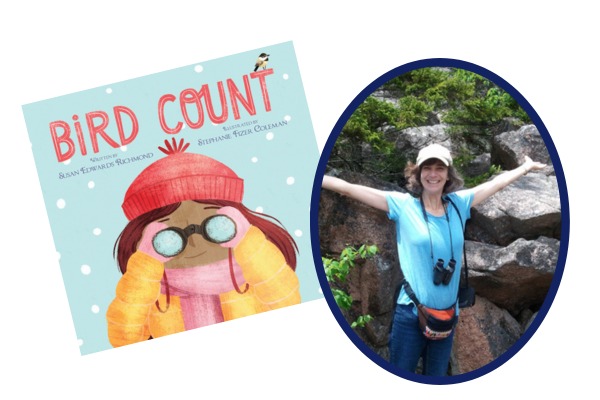
Bird Count by Susan Edwards Richmond brings you along for the annual Christmas Bird Count with a young girl named Ava. Learn about being a citizen scientist as well as some tips for identifying and observing birds. After you read, bundle up and head outdoors to see what birds you can see in your own neighborhood.
Connect
In the book, Big Al says “Did you bring the scientist’s most important tools?” Ava goes through her bag...binoculars, field guide, notebook and pencil...what is she forgetting?? Her EYES AND EARS of course...the scientist's most important tools! As you spend time outdoors this winter, tune into your senses of sight and hearing to connect with the world around you. Keep track of what you see and hear in a nature journal. Then, just like Ava, warm up around a cozy fire!
Explore
Birds are incredible...so much in common yet so diverse! Use a field guide to look at similarities and differences between birds. Do those differences give you any clues to where the animal lives, what it eats, or how it survives? Begin to learn how to be a birder by practicing using binoculars and field guides. Learn to identify bird calls by watching for the caller. Record your data!
Other ways to explore:
- Find a Sit Spot. Pick a location and try to sit still for 5-10 minutes. Record what birds you see and hear. Repeat at the same location for a week, then try a different habitat. What differences do you notice about the bird species and habitats?
- Practice using I notice…, I wonder…, It reminds me of… as you learn about birds and bird calls.
Engage
Become a Citizen Scientist! First, learn as much as you can about birds and practice the strategies Ava used in the book. Find out more information about participating in the Great Backyard Bird Count or create your own classroom bird count. How much data could you collect if everyone reported the birds they noticed on their way to school each morning?
Invite birds to your neighborhood. Build better habitat for birds on your schoolyard, in your backyard, or at a local natural area by planting native trees, shrubs, and flowers. Don’t be too eager to do fall garden clean-up since seed heads provide important food sources for many birds.
Feed the birds. Make sure your feeders don’t run out during the coldest, snowiest days. Keep track of visitors to your feeders. Check out Wisconsin's Favorite Winter Birds for identification practice and hints on what types of bird seed to use.
About the author
Susan Edwards Richmond loves to go birdwatching! She teaches preschool on a farm and wildlife sanctuary in eastern Massachusetts. She earned her M.A. in Creative Writing from the University of California, Davis, and is an award-winning poet with five collections of nature-based poetry for adults. She is happiest exploring natural habitats with her husband and two daughters, and learns the native birds wherever she travels.
The Christmas Bird Count is an annual event. Find out more at the Audubon Society website. (Leaves EEK!)
There are several resources that you can visit with your child to learn about birds. Try these:
- Cornell University's All About Birds website includes photos, maps, and recordings. (Leaves EEK!)
- eBird is a map-based database. You can find local birding hotspots, print a bird list for your location, and see what birders are finding. (Leaves EEK!)
Visit Susan Edwards Richmond website to learn more about Bird Count and her other books. Check out Susan’s resources page for a detailed activity guide to complement her book. Bird Count was selected to be a Mathical Honor Book! How could you use this book to teach math concepts? (Leaves EEK!)
Books, books, books! Consider supporting nature-based authors, many with roots in Wisconsin or the Midwest, by adding featured Story Edventure books to your home, school, or community libraries. If you purchase from our Bookshop a percentage of your purchase will benefit FIELD Edventures. (Leaves EEK!)