
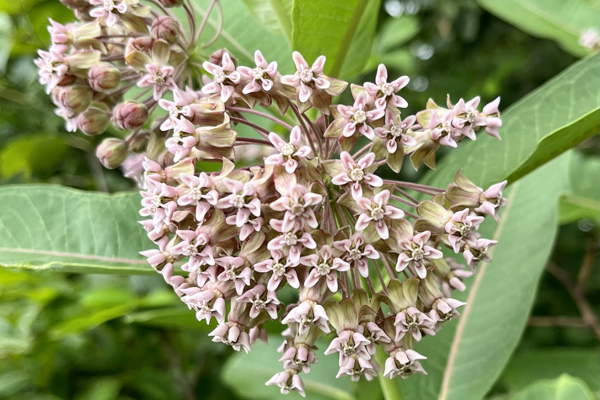
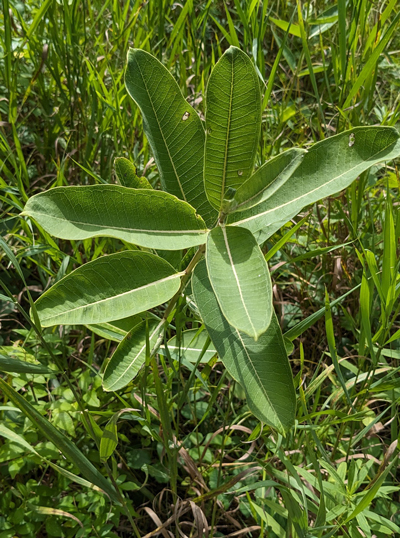
Common name: milkweed - There are many different species of milkweed in Wisconsin
Scientific name: Asclepias sp. The "sp." means "species." We will be talking about several different species of milkweed.
Common milkweed
The milkweed species that you are most likely to find in Wisconsin is common milkweed (Asclepias syriaca).
What does common milkweed look like?
- Height: 2-6 feet tall with a single, simple stem
- Leaves: opposite, oval-shaped, 2 to 10 inches long. The top surface of the leaf is smooth, but the bottom surface is hairy.
- Flowers: pink to lavender. The main flower is a bunch of little flowers on the same stalk. They bloom from late June to August.
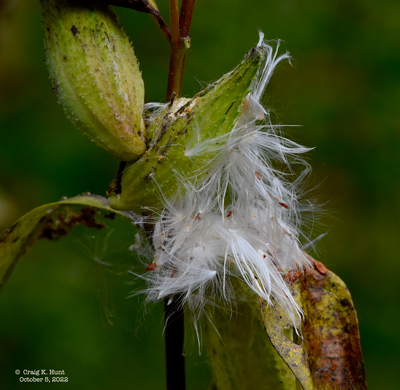
- Fruit: warty-looking seed pods. Seeds have downy fluff that carries them on the wind like a parachute.
Where can you find it?
You'll find this plant in fields, meadows, and along roadsides.
Why is it important?
If you find milkweed, look for monarch caterpillars and butterflies. The monarch butterfly lays its eggs on milkweed leaves. The growing larvae (caterpillars) eat milkweed leaves. These leaves contain a toxin (poison). The toxin doesn't hurt the caterpillar, but it does make the caterpillar poisonous and bad-tasting to many predators. Because it eats milkweed leaves as a caterpillar, the monarch butterfly is also poisonous.
Other milkweeds!
Common milkweed is only one species of milkweed you can find in Wisconsin. There are thirteen species. Here are some of the ones you are more likely to find.
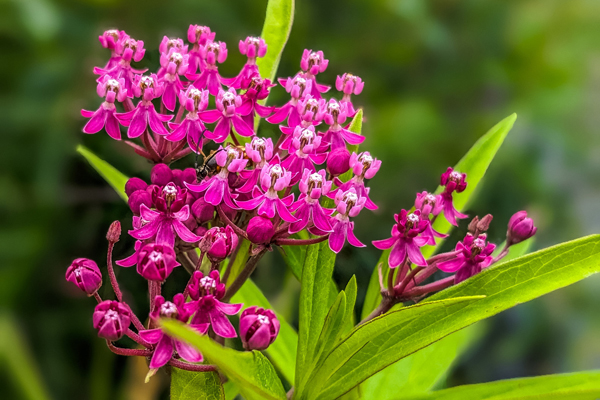
Swamp milkweed
Asclepias incarnata
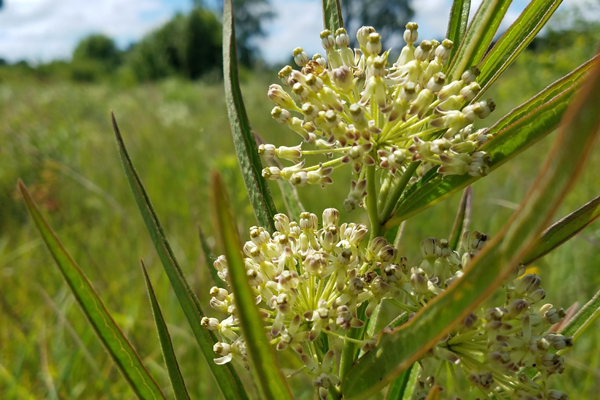
Tall green milkweed
Asclepias hirtella
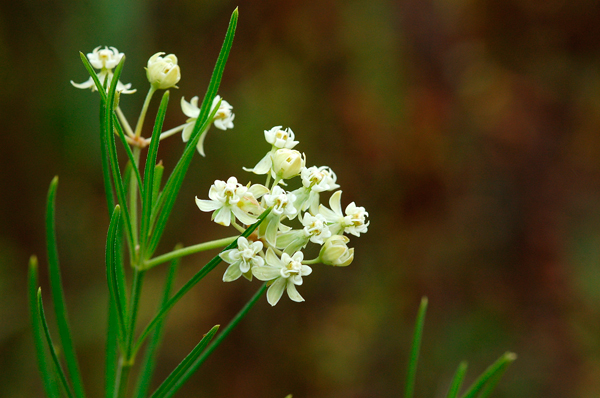
Whorled milkweed
Asclepias verticillata
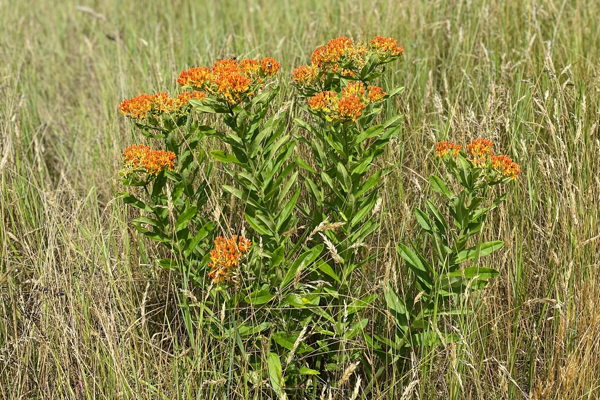
Butterfly milkweed
Asclepias tuberosa
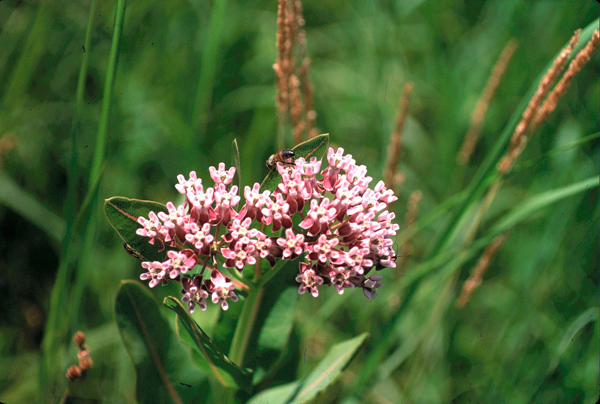
Prairie milkweed
Asclepias sullivantii
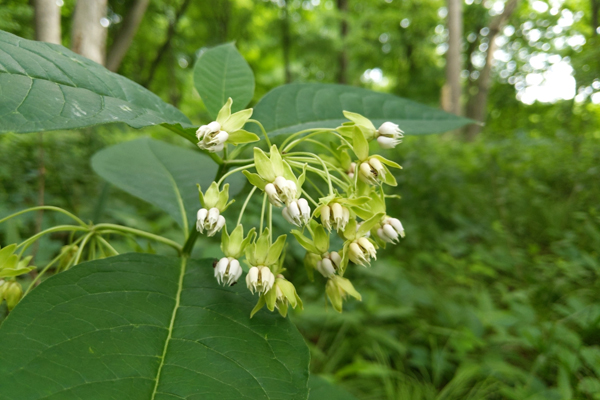
Poke milkweed
Asclepias exaltata
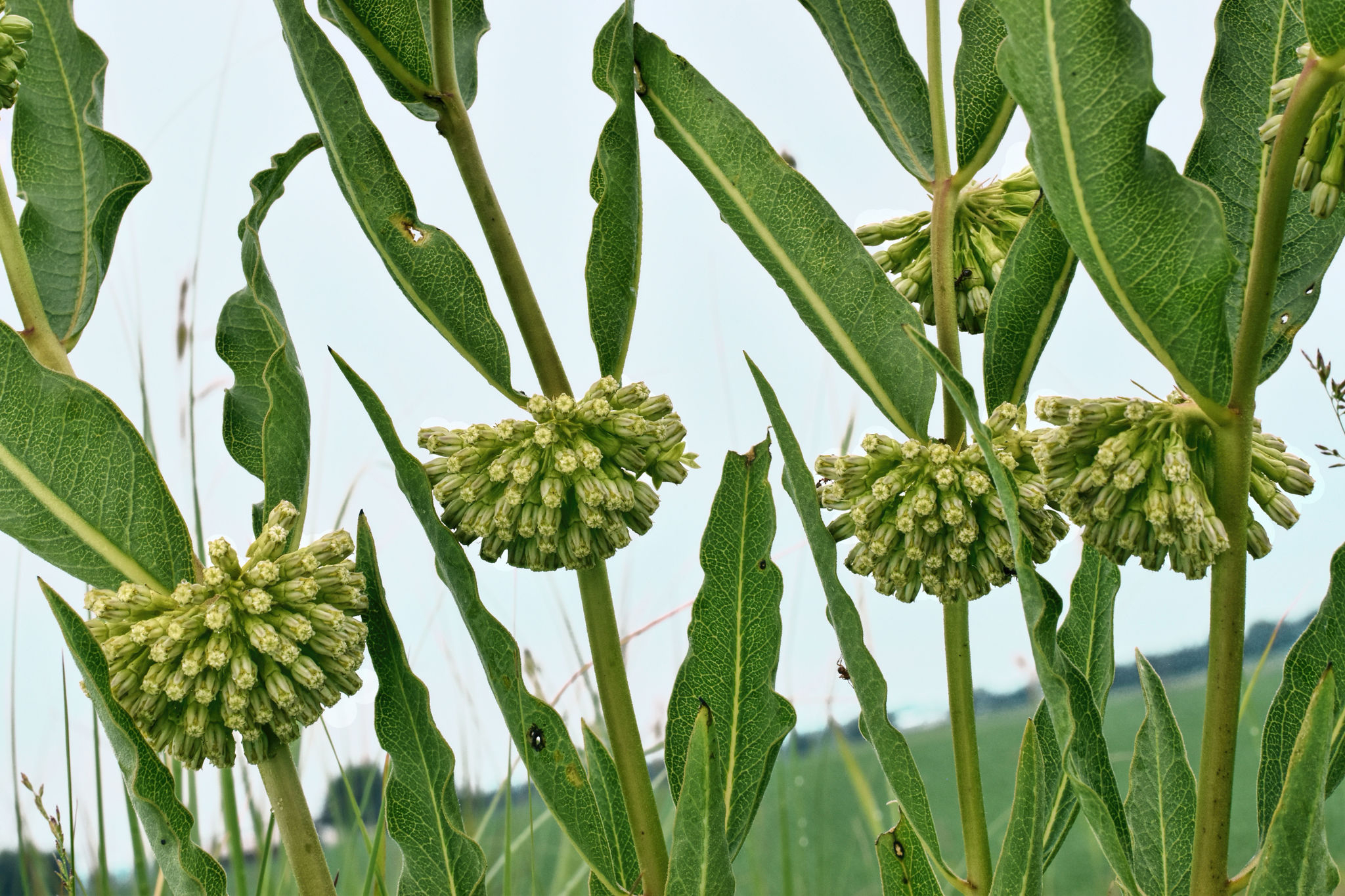
Green comet milkweed
Asclepias viridiflora

Did you know...
- Sap from milkweed was used by pioneers as a cure for warts.
- The fluffy parachute of the seed is used by Native Americans to insulate moccasins.
- The dried empty seed pods were used as Christmas tree decorations by early pioneers.
- Boys and girls from Wisconsin schools collected 283,000 bags of milkweed fluff for use in military life jackets during World War II.
- Milkweed is used as an indicator of ground-level ozone air pollution
- You can attract butterflies to your yard by planting a butterfly garden.