
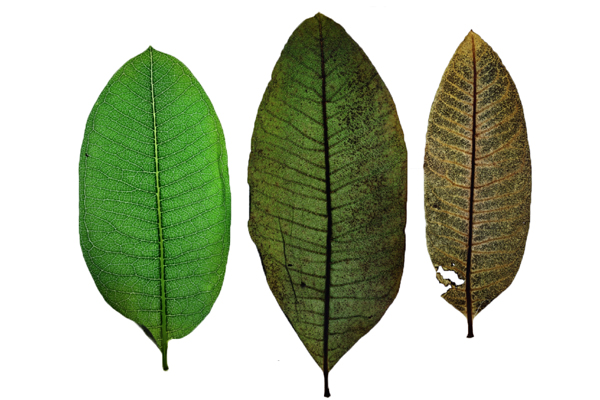
Milkweed polka dots
One way we can learn more about air pollution is to study plants that are sensitive to air pollution. Milkweed is one of these plants. The most obvious signs of ozone damage are dots on the leaves, but ozone-damaged milkweed plants also lose leaves, turn strange colors, and fail to grow as big as plants not damaged.
Before you head outside to see if the milkweed in your neighborhood is damaged by ozone, follow this link to learn how to recognize a milkweed plant!
Ozone injury is always:
- on the upper leaf surface only
- interveinal (between the veins not across the veins)
- black
- distinct with sharp edges
- most pronounced on the older and middle-aged leaves
Ozone injury will never:
- have haloes
- rub or wash off
And, don't forget that most leaves will have multiple types of damage and that most damage is caused by insects, diseases, nutrient problems, or heat stress, rather than ozone.
Okay, now that you've reviewed the classic ozone injury symptoms, follow this slide show and view different milkweed leaves. Can you tell injury caused by ozone from injury caused by other things?
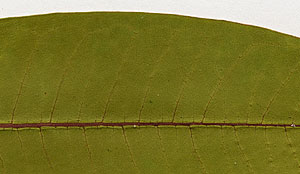
Healthy milkweed leaf
Completely healthy mature milkweed leaves get harder to find as summer goes on. The longer a leaf is exposed to insects, diseases, weather extremes and yes, ozone, the more likely the leaf will suffer one or more types of injury. As you're checking your plants, look for evidence of different kinds of injury. Count and compare the number of spotless leaves (usually the young leaves) with those showing injury.
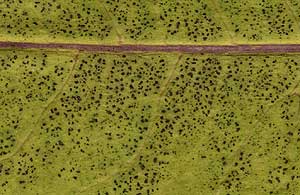
Classic ozone injury on milkweed
Check out this leaf. It has all the signs of classic ozone injury. Check for stipples (black dots). Ozone stipples will only be found between the veins, not on them. They are found only on the upper leaf surface. They will have distinct, sharp edges with no haloes or discoloration around the stipple. They will be black or very dark in color. They will be scattered over the leaf surface not clustered in groups or obvious shapes, such as circles.
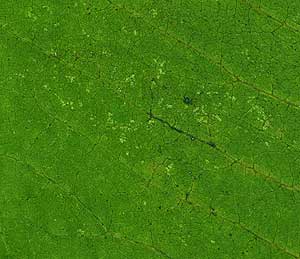
Aphid damage on milkweed
Aphid feeding is a common injury on milkweed leaves. But, aphid damage is rarely confused with ozone injury. Both have distinct edges and are interveinal (found between veins not across the veins), but the similarity stops there. See the white flecks in the picture? That is aphid damage. You can find this damage on the underside of the leaf, too.
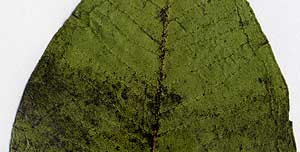
Aphid dew on milkweed leaf
The top half of the leaf is green with circular black dots. The bottom half of the leaf surface looks dirty with blackish strands or fuzz caused by fungi growing on aphid honeydew deposits. Many of the leaves you see in the field will have much more discoloration than this leaf. Remember to clean the upper leaf surface before looking for ozone injury. (By the way, the circular black dots on this leaf are found on the veins and go through the leaf. Both are sure signs that this is not ozone injury.)
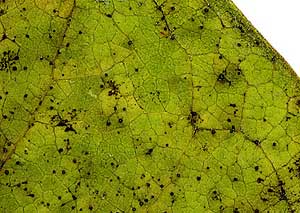
Black circular lesions on milkweed
This leaf injury is black, has distinct edges, and most of the lesions do not cross veins. If you turn this leaf over, the injury is very obvious on the underside of the leaf too. This is not ozone injury.
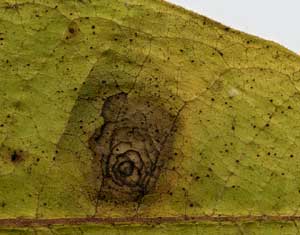
Blight injury on milkweed leaf
Can you see the grayish-brown bands of dry, dead tissue on this leaf? This is a fungus attacking the milkweed leaf, leaving concentric rings. As the leaf grows and as weather conditions change over the summer, the infection can grow slowly or rapidly depending on the conditions. While the leaf spots are often ugly, they don't affect the plant too much. Infected plants often bloom and set seed. But, heavily infected leaves may die earlier than uninfected leaves.
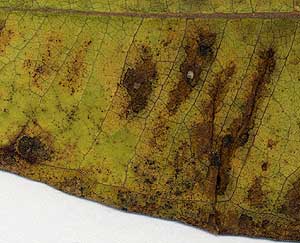
Heat stress on milkweed plants
The injury on this leaf is related to heat stress and the aging of the leaf. The small black dots look like ozone damage, but look closely. They have a discolored zone around them. This would not be classified as ozone injury.