
Some common species...
White pine (Pinus strobus)
The white pine, Michigan's state tree, is considered to be the largest conifer in the northeastern United States. The needles are soft, bluish-green to silver green in color and are regularly arranged in bundles of five. The eastern white pine forests in the lower peninsula of Michigan and northern Wisconsin were clear-cut for lumber from 1850 to 1890; standing over 200 feet (60 meters) tall, each tree could provide 6,000 board feet (10 cubic meters) of lumber. However, reforestation efforts are beginning the slow regrowth of this much loved tree.
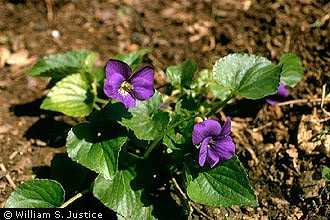
Blue violet (Viola sororia)
The blue violet can be found throughout the entire Great Lakes basin, and is Minnesota's and Illinois' state flower. The violet's colors can vary, ranging from blue to yellow, white, lilac and even green!
White oak (Quercus alba)
The white oak, Illinois' state tree, is a flowering angiosperm that can grow to be 100 feet tall, three feet wide, and can live to be 400 years old! The tree has grayish-white bark, which gives its name, and green-brown acorns. In the fall, the leaves will turn a variety of colors including red, gold, yellow, or purple
... and some rare species
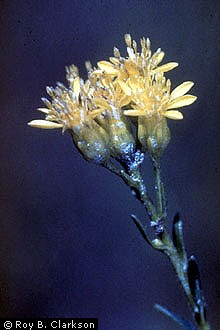
Houghton's goldenrod (Oligoneuron houghtonii)
This shoreline goldenrod grows nowhere else in the world but along the Great Lakes shoreline, mostly along the northern shores of Lakes Michigan and Huron. Increased human activity, such as foot and car traffic, along shorelines has caused Houghton's goldenrod to be listed as a threatened species.
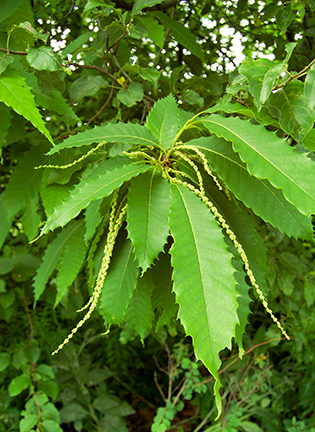
American Chestnut (Castanea dentata)
The chestnut tree was once abundant throughout the eastern Great Lakes region as well as other areas in the eastern United States. However, a chestnut blight was introduced by the non-native asiatic chestnut in 1904, and within 50 years the disease has spread to the entire population of chestnuts. While chestnut sprouts can still be found today, the disease usually kills the trees before they are able to produce seeds.