States and communities are beginning to realize the effects of sprawl, and many are in the early stages of developing and implementing plans to curb it. The city of Portland, Oregon, is one of the best examples of efficient land-use planning in the United States. In the late 1970s, Portland's government drew an invisible circle around the city limits, restricting any development beyond that line. Therefore, the city grew up instead of out, retaining both the downtown life inside of the city and the farmlands and open spaces outside of the city. Developers were prompted to use space more efficiently, and rather than leaving abandoned buildings to decay, these buildings are often cleaned up and turned, once again, into housing, office, or commercial spaces. Portland does have its share of growth-related problems, such as high rents and traffic congestion, but it's an excellent example of what a city can do to stem urban sprawl.
Protect farmers and greenfields
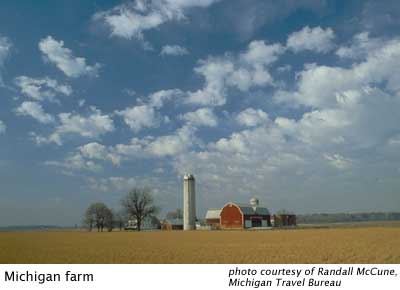
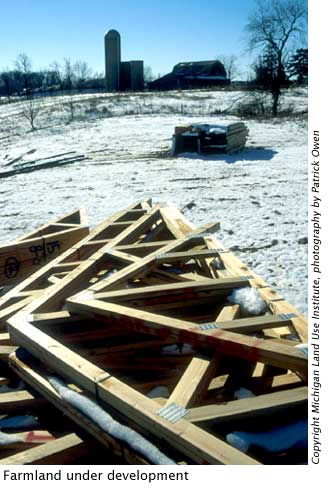
Without farmland there would be no food, and without greenfields, our landscape would be a never-ending chain of strip malls, big box stores, and subdivisions connected by pavement. With farmland and other greenfields rapidly disappearing, some organizations and states are beginning to fight for protection. Organizations such as the "1000 Friend" chapters (see More Information) and other grassroot efforts bring together citizens with a variety of backgrounds and interests, such as farmers, environmentalists, ruralists, and urbanists. By forming a coalition, their concerns about land-use practices are better represented and create a stronger impact on local governments. Some state governments have also created programs to protect open spaces and farmland, such as the Growing Greener and Growing Smarter programs in Pennsylvania. The Growing Greener program will invest more than $650 million in land protection, and provide grants to organizations who have ideas on how to protect Pennsylvania's natural resources, while the Growing Smarter program encourages effective land-use planning while respecting the rights of property owners.
Revitalize your downtown
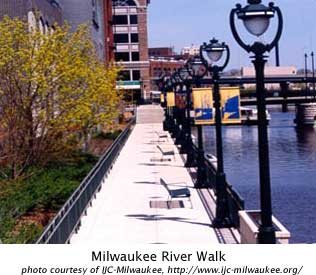
While many of the large cities around the Great Lakes region are struggling with depressed downtown areas, some cities are discovering ways to make their downtown more desirable. Milwaukee, Wisconsin, has been able to clean up some of its brownfields and entice businesses and people back to the city. The mayor, John O. Norquist, is well known for his efforts to promote urban revitalization within Milwaukee by increasing job growth, simplifying zoning laws, lowering city taxes, and creating a safer city in which to live. He also supports deconstructing a partially built highway that would cut right through an old community, and his leadership helped build a river walk along both sides of the Milwaukee River, providing public gathering places and beauty.
Work with your neighbors
Land-use decisions are best made when looking at the entire region, rather than just a small portion of it. Development not only affects your community, but those to the north, south, east, and west of you. Communities may be created within political boundaries, but ecosystems, rivers, wildlife habitats, and the air you breathe don't follow these boundaries, so by including other communities in planning development, more responsible and efficient growth can result.
The Great Lakes region provides some examples of regional cooperation. The First Suburbs Consortium of Northeastern Ohio is a group of 10 Cleveland suburbs who decided that working together, instead of separately, would provide better solutions to Cleveland's growth and sprawl problems. The Consortium has brought together more than 200 city and state leaders in the fight against sprawl, and Columbus, Dayton, and Toledo now all have First Suburbs organizations as well. The Grand Valley Metro Council is another good example of regional cooperation, bringing together over 30 townships in the Grand Rapids, Mich., area in order to promote anti-sprawl land-use issues. And the Twin Cities Metropolitan Council includes more than 180 townships across seven counties, and helps the city plan and manage the increasing population and growing economies of Minneapolis and St. Paul.
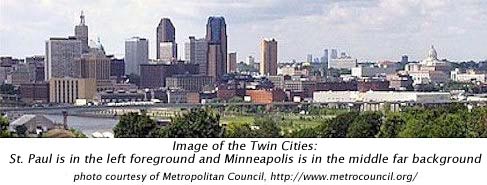
(photo courtesy of Metropolitan Council)
A new way of thinking
How can a city promote economic growth while preserving its open spaces and increasing the quality of life for its residents? This question has prompted new ways of thinking about growth and development, such as new urbanism and smart growth. New urbanism seeks to redesign towns so that they have a central downtown area, walkable neighborhoods, and public meeting spaces, while smart growth addresses these issues by redirecting public spending away from projects and programs that promote sprawl and toward those that revitalize cities and towns. Both ideas have critics and obstacles, and have yet to be fully implemented into the Great Lakes region. But discussions have begun in this region, and organizations, such as the Groundwork: Center for Resilient Communities, are already educating the residents and governments about these new ideas.
Creating better-planned communities would also promote more alternative means of transportation, such as bus, train, bike, or foot. By providing means of safe, reliable, and efficient alternatives to car transportation, cities can provide a better atmosphere in which to live, while also protecting the environment. Minneapolis is in the first stages of providing light rail transportation, and the city also has a program that promotes bicycle transit, called the Yellow Bike Coalition. Bikes are kept at local businesses and other public places, and anyone can check them out, like you would a library book, for the day and longer periods of time.
Our communities will grow, and change is unstoppable. But we can either let growth proceed haphazardly, or we can plan for growth and move toward communities that are efficient, environment-friendly, and pleasant to live in or visit. This election year, citizens and politicians will start voicing their opinions on important issues, and sprawl is likely to be at the top of many peoples' list. Visit some of the following web sites and find out how you can make a difference.
AFT works to stop the loss of productive farmland and to promote farming practices that lead to a healthy environment.
Provides reports on sprawl and information on how you can help your community.
State-by-state information on developed lands, land-use laws, and population as well as smart growth.
Friends chapters in the Great Lakes Region
1000 Friends of Wisconsin
1000 Friends of Minnesota
10,000 Friends of Pennsylvania
References
The Dark Side of the American Dream, The Costs and Consequences of Suburban Sprawl. Sierra Club, 1998.
Sprawl Report 2000. Sierra Club, 2000.
Langdon, Philip. How Portland Does It, The Atlantic Monthly. November 1992.