
Did you notice that?
Are you observant? Phenology is the study of changes in plants and animals as they respond to weather, climate, changing day lengths, and the seasons. If you like warmer weather, you might eagerly wait for the first signs of spring. Do you notice when the buds begin to burst open? That is a phenological event. It happens every year. Migration and flowering are two more examples of phenological events.
Look around for the following seasonal changes this month as winter gives way to spring.
- Tree sap begins flowing as the days get warmer. Learn more about the sugar maple and where maple syrup comes from.
- Male red-winged blackbirds return to Wisconsin from their warm southern winter retreats. You'll see them returning in large mixed flocks, sweeping across the sky and landing in chattering groups in wetlands.
- The woodcock, also called timberdoodle, breeds in March and April throughout most of the eastern United States and Canada. Learn more about this small, long-billed bird and the male's spring dance.
- Tundra swans breed and nest in the tundra and in sheltered marshes on the Alaskan and Canadian coast near the Arctic Circle. They pass through Wisconsin on their way north from March through late May.
- Bluebirds return.
- Frogs begin to call in wetlands. Listen for the high-pitched "peep" of the spring peeper, the hoarse quacking of the wood frog, or a long "crreek" sound, like a fingernail pulled across the teeth of a comb, made by the chorus frog.
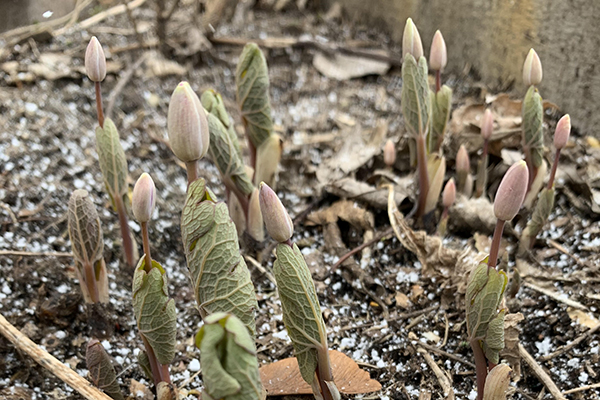
- Bloodroot, an early spring wildflower, first appears with its leaves wrapped around the flower bud.
- Many fish are moving about in Wisconsin's waters. They are exciting to watch as they dance, wiggle, and sail through the shallow waters of our rivers and lakes to find their breeding places.
- Many animals are born in spring, and you might discover young animals in your yard or in the wild. They are often cute, helpless, and seem friendly but remember, a parent is usually nearby. Wild animals are best left in the wild.
Tags:
Phenology