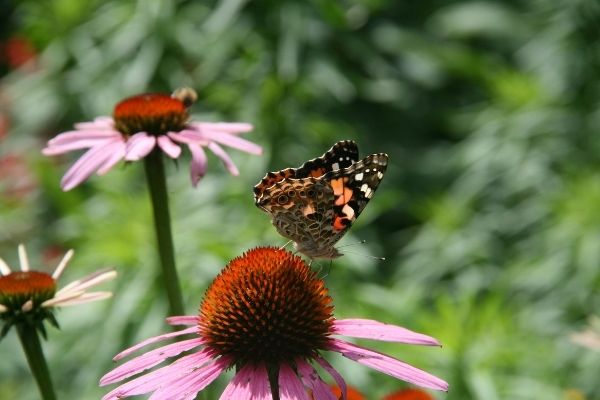
Butterflies go through a complete metamorphosis. This means they have four stages to their life cycle: egg, larva, pupa, and adult.
After a female butterfly has mated, she is ready to lay her eggs. She uses her feet, tongue, and antennae to find the right plants to lay her eggs on. These plants are called host plants. It is important that the female laid her eggs on the right plants so that the newly-hatched caterpillars can start eating right away.
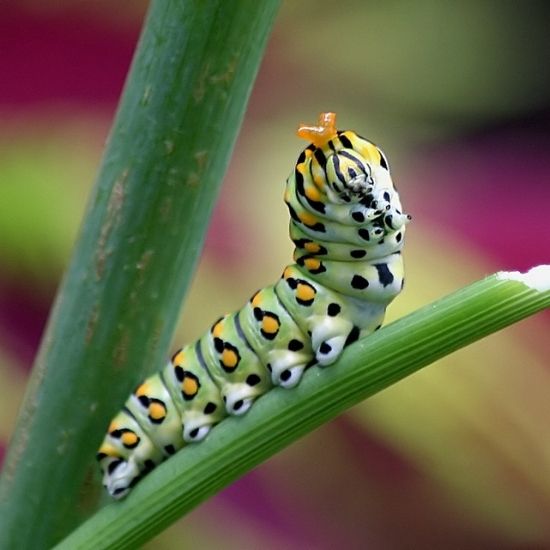
The newly-hatched caterpillar’s job is to eat and grow. Some caterpillars will eat a variety of plants. Others, like Karner blue caterpillars, will only eat the leaves of wild blue lupine plants. When the caterpillar has eaten so much that its skin gets tight, it molts and keeps eating.
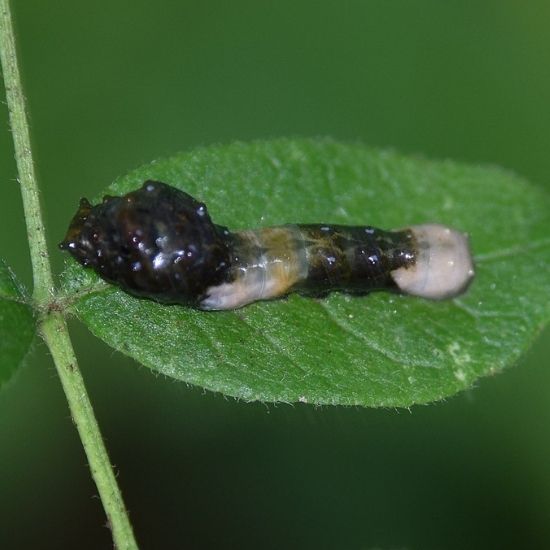
Caterpillars have many predators. As you look for caterpillars, you will discover that many of them have special adaptations that help them avoid becoming a predator’s lunch.
When a caterpillar is full grown, it stops eating and looks for a place to form its chrysalis. It attaches itself to a twig, leaf, or other object and sheds its skin one last time. When the old skin falls off (or gets wiggled off), the chrysalis is visible. If you are thinking that there are predators that would eat a chrysalis, you are right.
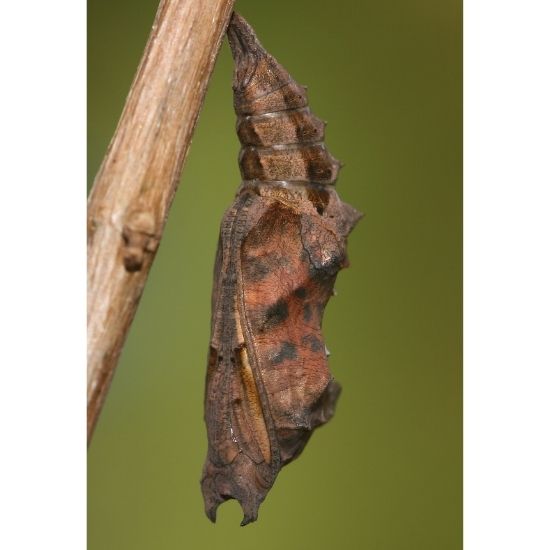
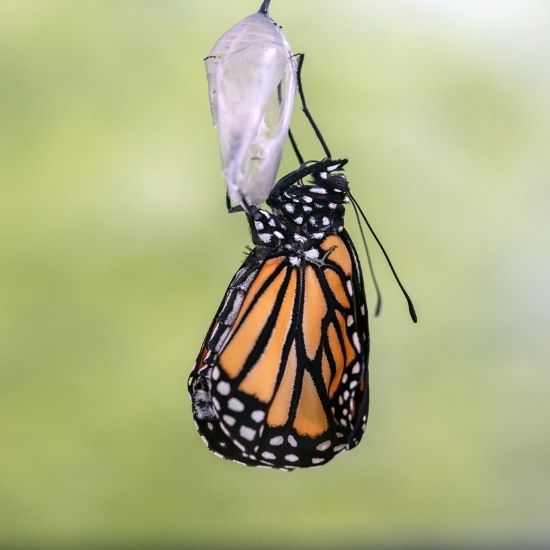
When the transformation from caterpillar to adult is complete, the chrysalis splits open. The butterfly uses its long legs to push out of the chrysalis. Its wings are crumpled, wet, and useless. It uses its body to pump insect blood into the veins of the wings. The wings stretch out to their full size. When the wings are stiff and dry, the butterfly can fly off to start the cycle all over again.