
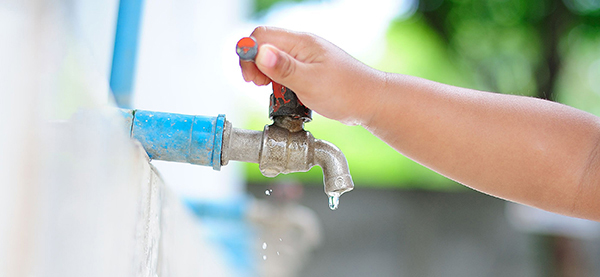
You've heard of having a "green thumb" but do you have a "blue thumb"? A blue thumb means you know how to make water-responsible choices. Every year the first full week in May is designated "Drinking Water Week" to help spread the word that water is one of our most precious resources. Throughout the week, libraries, schools, and other groups hold events to help people understand how to protect our drinking water.
Did You Know?
- There is the same amount of water on Earth now as there was when the Earth was formed. There have been only very small changes. Can you think of ways that water might escape to space? How could water be added to Earth's supply?
- About 97% of all the world's water is salty or otherwise undrinkable. Another 2% to 3% is locked in ice caps and glaciers. That leaves about 1% for all our needs.
- Water regulates the Earth's temperature. It also regulates the temperature of the human body.
- The average total home water use for each person in the U.S. is about 80 gallons a day.
- More water is used in the bathroom than any other place in the home.
- A dripping faucet can waste up to 2,000 gallons of water a year.
What You Can Do!
At school and at home, you can take control and help protect our water resources.
- Turn off the tap in your bathroom while you brush your teeth.
- Fill a pitcher with tap water and put it in the fridge, rather than running the tap every time you want a cold drink.
- Clean sidewalks and driveways with a broom--not the water hose.
- Water your lawn in the early morning to avoid evaporation.
- Repair dripping faucets.
- Place a layer of mulch around trees and plants to retain water.
- Plant low-water-use grasses and shrubs in your yard.
Community Action
Knowledge and action are important tools to safeguard our public drinking water supplies. Here's what your community can do:
- Hold a cleanup day around a lake, river, or reservoir.
- Ask a grown-up to become a Water Action Volunteer (WAV) with you. WAV is part of the University of Wisconsin-Madison.
- Create an educational exhibit designed by students for a community center or mall.
- Take part in a special collection for batteries and other toxic household materials.
Make sure you have a blue thumb and help others to conserve our precious water resources!
Tags:
Groundwater