Common name: northern leopard frog
Scientific name: Lithobates pipiens
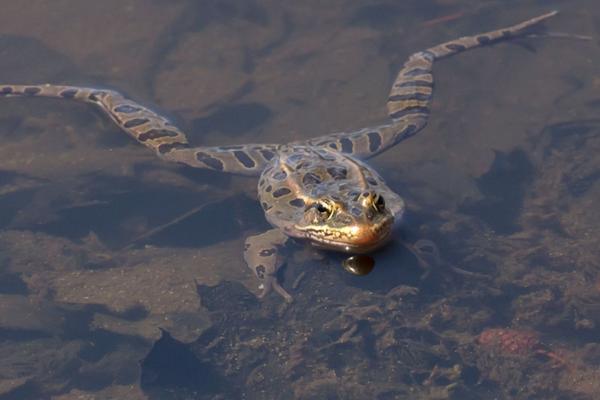
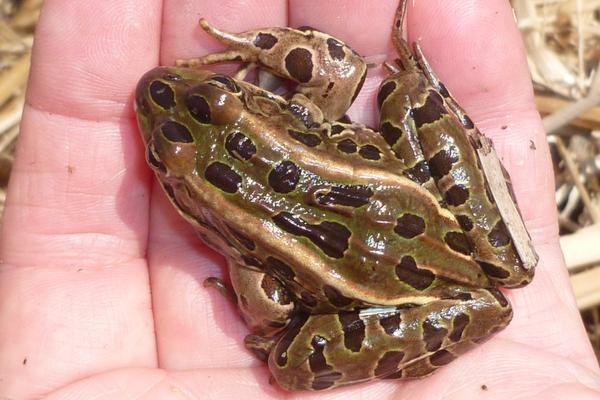
Leopard frogs are medium-sized frogs 2 to 3 1/2 inches (5.1-8.9 cm) long. They have green or brown skin with chocolate brown spots outlined with light cream borders. Look for a light stripe on their upper lips and two ridges on their backs.
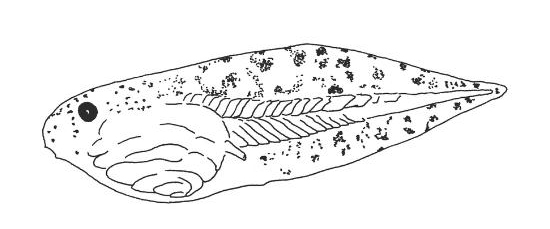
Leopard frog tadpoles have large, see-through tail fins with black spots. Their bellies have an odd pink iridescence. You can usually see right through their thin skin and stare at their coiled intestines!
Leopard frogs live all over Wisconsin in fields, prairies, and backyards. They need water nearby for breeding, but you will often find them far from water during the summer.
In very early spring, leopard frogs wake up from hibernation and head to breeding ponds. A male leopard frog begins calling by taking a deep breath and filling his lungs. With the nose and mouth closed, he pushes the air from his lungs into his vocal sacs to inflate them. Vibrations in the frog's throat are amplified by the inflated vocal sacs.
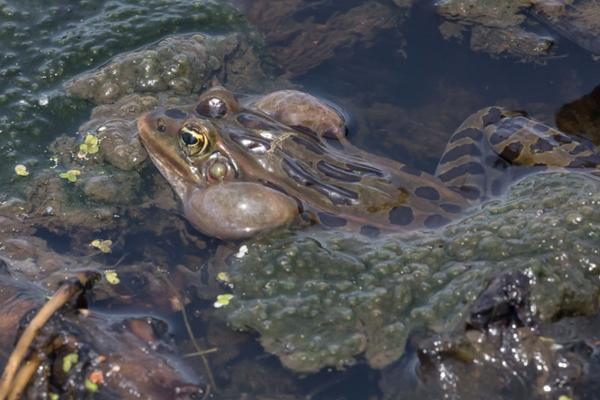
The calling males attract females to the pond. The females lay large egg masses. As the eggs are being laid, the male fertilizes them by releasing sperm over the eggs (external fertilization).
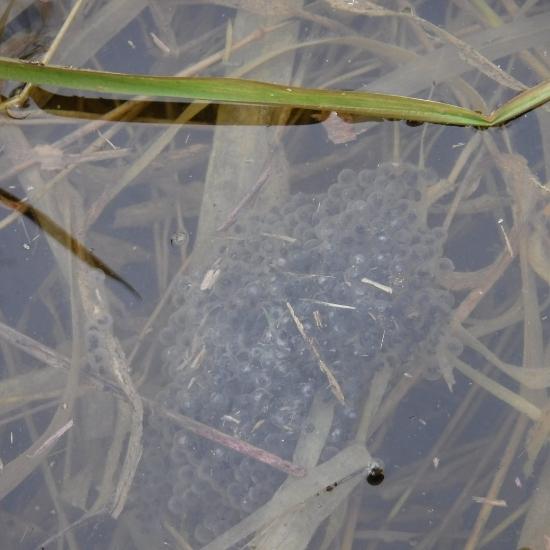
Depending on the temperature, the eggs hatch in 4 to 20 days. It takes 60 to 80 days for the tadpoles to transform into froglets and leave the pond.
- You can try to imitate the sound of a leopard frog calling by rubbing a wet finger over the outside of a well-inflated balloon.
- Every now and then, when conditions are perfect, you can see a leopard frog swimming under the ice. They do not burrow into the mud at the bottom of the pond like some frogs. They usually just rest on the bottom.
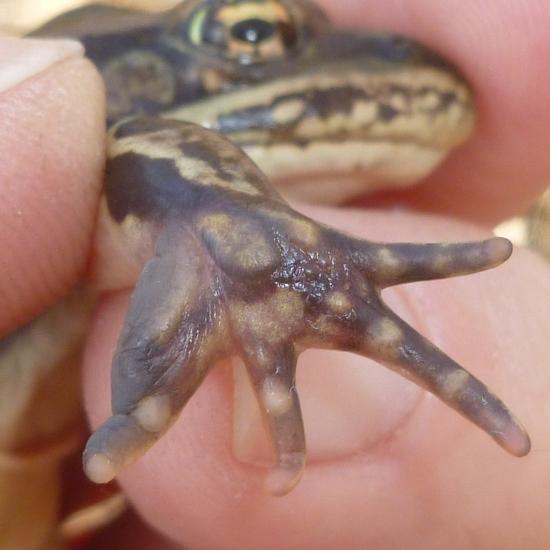
- In spring, the "thumbs" of male frogs swell up. These oversized thumbs help the males to hold on to the females while they are laying eggs. A tight hold on the female helps to prevent other male frogs from taking his place.