
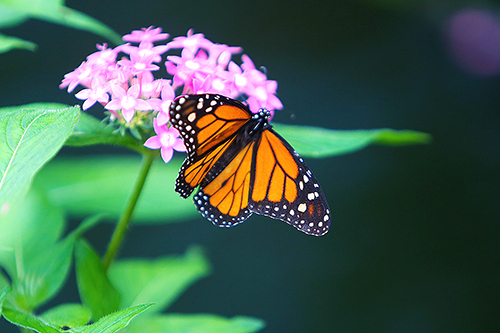
To find butterflies, you must think like a butterfly!
Butterflies are cold-blooded. This means they must be warmed up to fly. You will see more butterflies between about 11 a.m. and 3 p.m. During exceptionally hot weather, go a little earlier or a little later when it is not quite so hot.
Butterflies are hungry. Look for clumps of flowers in sunny spots. Look in a variety of habitats to find a variety of butterflies.
Butterflies are wary. Butterflies might look like they are casually flitting about, but they are always on the watch for predators. Wear drab-colored clothes so you don’t stand out.
Go to the butterflies!
Once you’ve found some butterflies, follow these suggestions for observing them:
Go slow
Butterflies have compound eyes that can see in all directions. They can detect your movements very well; however their depth perception is not very good. Take photos as you sneak closer. Later, you can zoom in on the photos to help you identify the butterflies that you see.
Stay low
Bend down or crawl among other vegetation. Try to look as small as possible.
Watch your shadow
If your shadow falls on the butterfly, it will cause a sudden change in lighting that will alert the butterfly to danger.
Be patient
Sometimes the easiest way to track down butterflies is to just wait. If you are sweating in the heat of the day, be ready for a butterfly to land on you and sip your salty perspiration!
Bring the butterflies to you!
If you are not having much luck pursuing butterflies, try bringing the butterflies to you. Then you can sit quietly and watch.
- Plant native flowers in pots, window boxes, and gardens.
- Pile some rocks in a sunny spot to create a place for butterflies to warm up.
- Create small mud puddles or areas with moist sand where butterflies can get a drink.
- Place a brightly-colored bandana on the ground and wait nearby. Can you trick a butterfly into thinking it is a huge flower?
- Use binoculars to view elusive butterflies.
Participate in a day-long count. The North American Butterfly Association tracks butterfly populations through its 4th of July Butterfly Counts. Check their map to find active counts near you.
Create a checklist. Visit iNatualist and search for all the butterflies that have been spotted in your area. This list will help you identify the butterflies that you see.